A journal of archives and fieldwork
What the background shows
The Manakia brothers’ photographs do not end at the frame. A detail in the background asks a question. An archive, a mountain or a person met on the road answers it, sometimes a century later. I record the discoveries here, as they come.
The man in front of the theatre
Manakia archive, Bitola
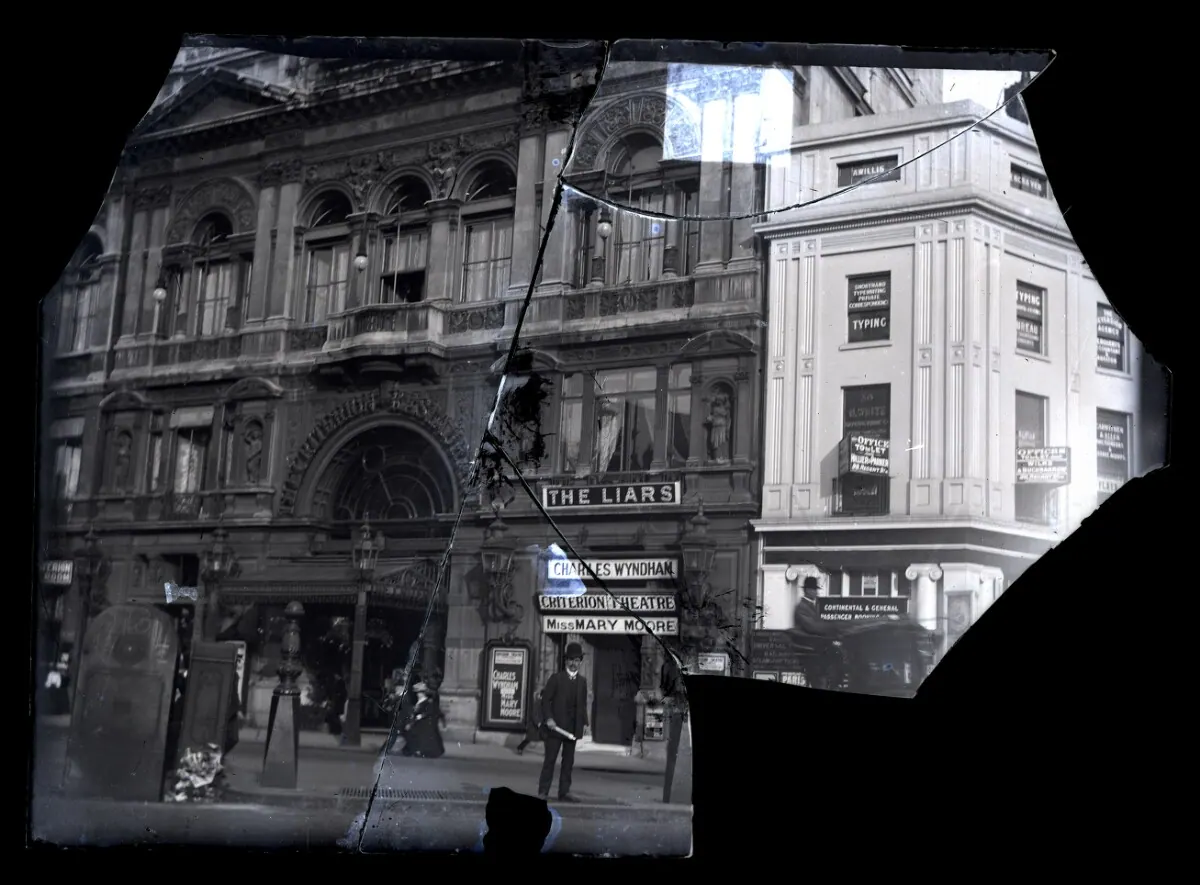
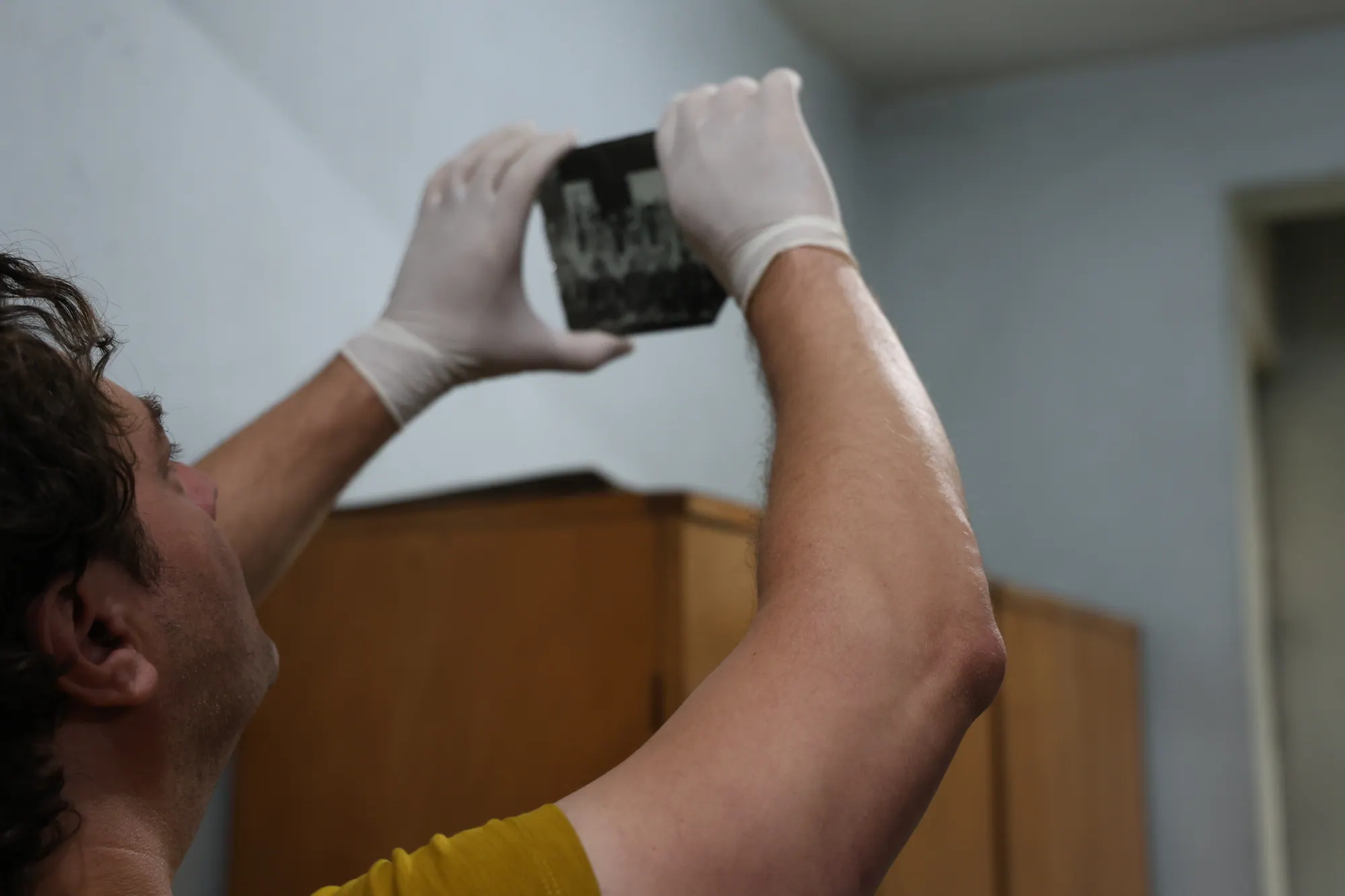
Among the glass-plate negatives in Bitola, one does not fit with the rest. It is broken into five pieces, glued back together at some point, with black gaps where shards were lost. A man in a bowler hat and a dark overcoat stands on the pavement, something tucked under his arm. There is not a fez, a dome or a minaret anywhere in the picture. Behind him is a façade with arches, columns and statues in niches; beside it, a typing office and a waiting carriage. The signs are in English. It is one of the very few photographs in the Manakia archive in which the Balkans are absent.
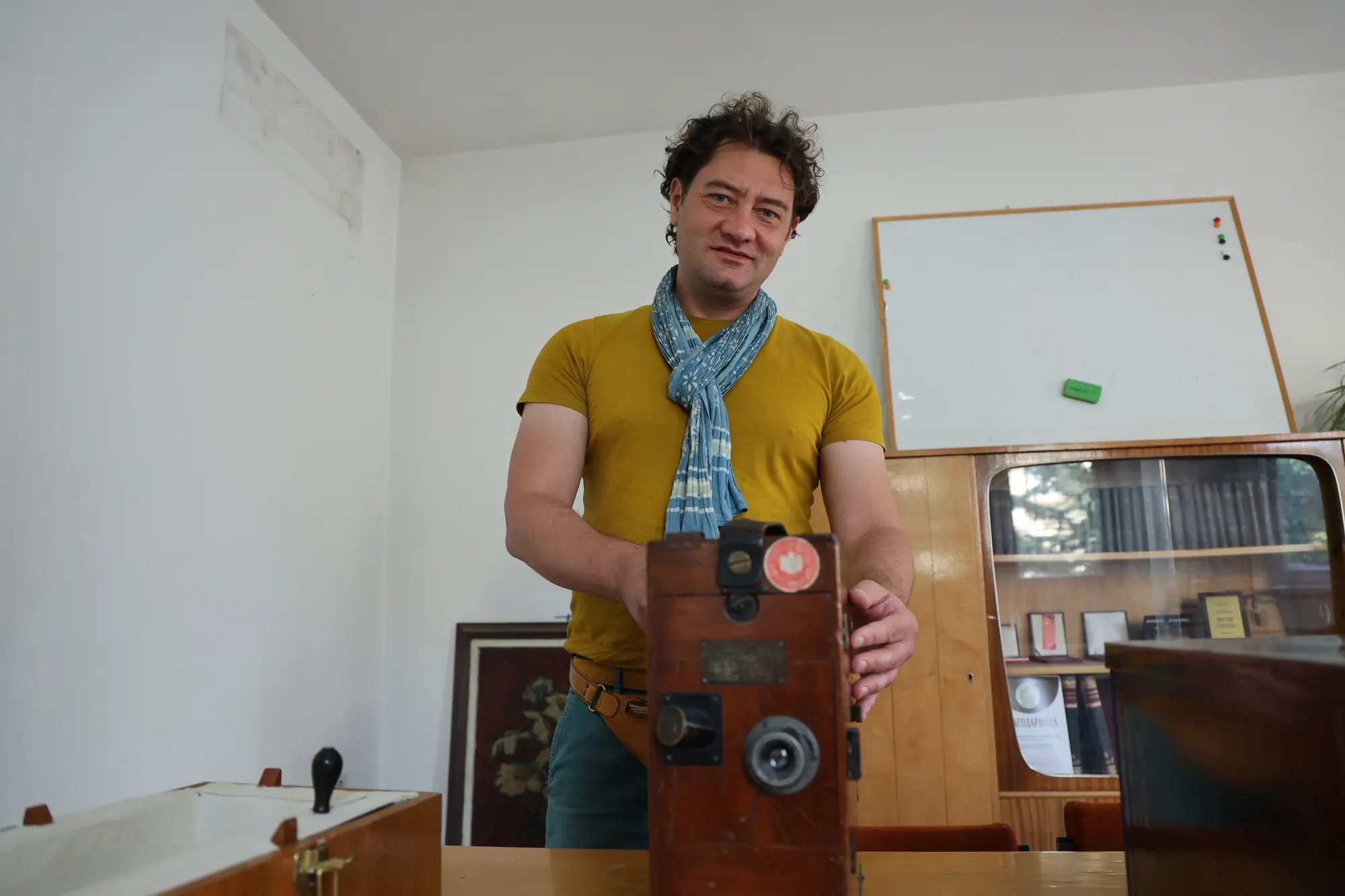
The man is Ianaki. It was known that he had gone to London for the device that would change his life: a Bioscope film camera, serial number 300, which today gives its name to the documentary film festival in Bitola. It was not known when. Encyclopaedias say 1905, some historians 1906.
The answer was on the walls. I enlarged the posters piece by piece, between the cracks in the glass. On the band above the door, Charles Wyndham and Miss Mary Moore, the theatre’s manager and its leading lady. On the board beside it, Criterion Theatre.
Above the entrance, in capitals, the title of the play: The Liars.
Henry Arthur Jones’s comedy was staged at the Criterion twice. The first time in 1897, with a different cast. Ianaki was then in Ioannina, only just starting to photograph. The second time, The Liars returned on 13 April 1907 and ran for a hundred nights, until 15 October, when The Mollusc replaced it. The theatre’s archive placed the photograph between April and October 1907.
The map remained. In 1907 Charles Urban, who made and sold the Bioscope cameras, had his firm at 48 Rupert Street. From his door to the entrance of the Criterion is a four-minute walk. Ianaki is not a tourist who has wandered into Piccadilly. He is a few steps from the shop where he buys his camera.
This moves a date in the history of film. The brothers’ first film, with their grandmother Maia Despa spinning wool in Avdela, cannot be from 1905. It was made after Ianaki returned from London, in 1907, as Emil Țîrcomnicu also proposes in Ioan D. Manakia în documente din arhiva Societății de Cultură Macedo-Română (1906–1948), published in 2024. Most likely it was filmed at the end of summer, before the Aromanians of Avdela drove their flocks down to winter pastures.
A comedy about lies, played for a hundred nights in London, corrected a date that encyclopaedias have repeated for a century.
Two officers born in the same year
State Archives, Bitola · 14–15 September 2026
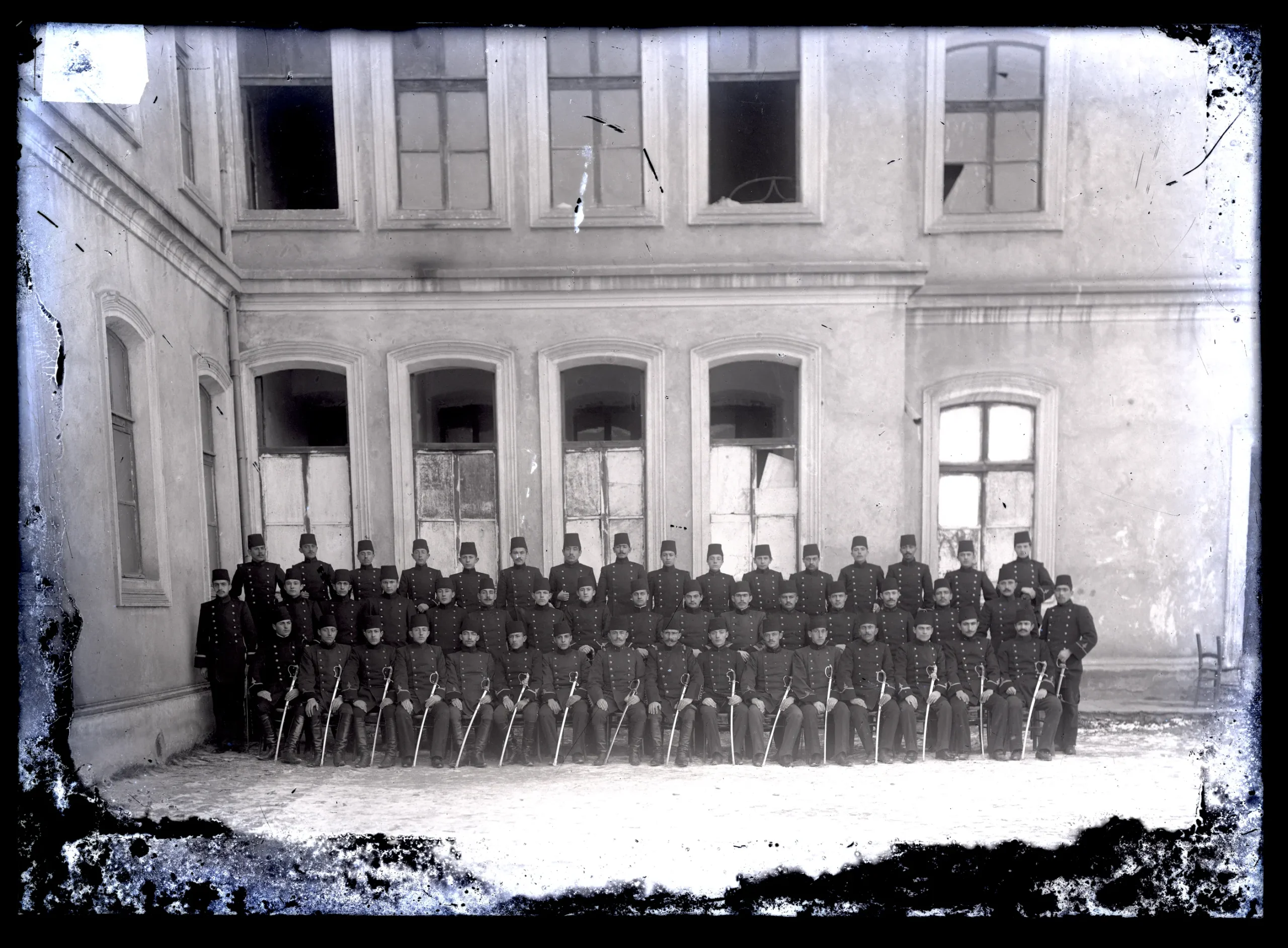
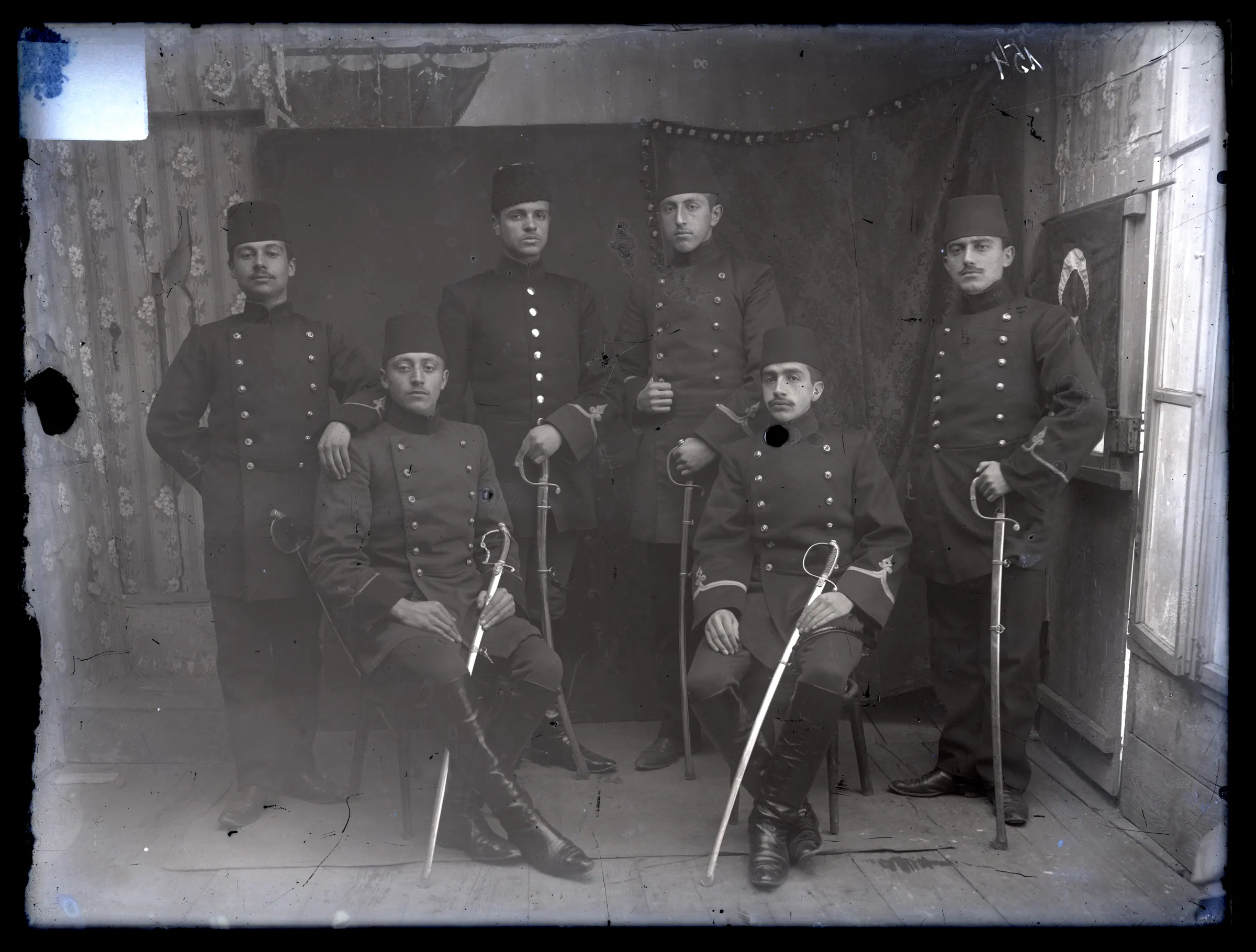
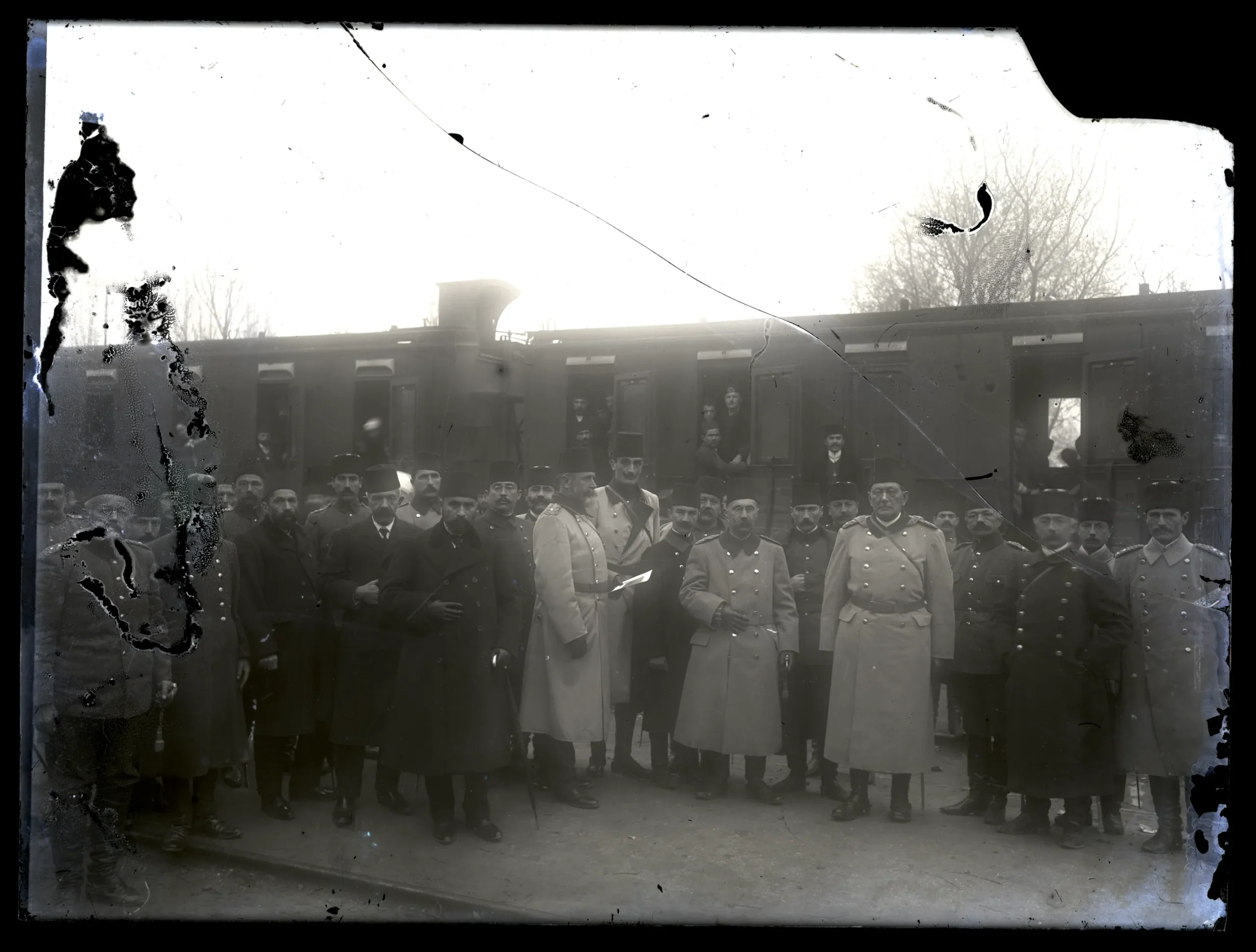
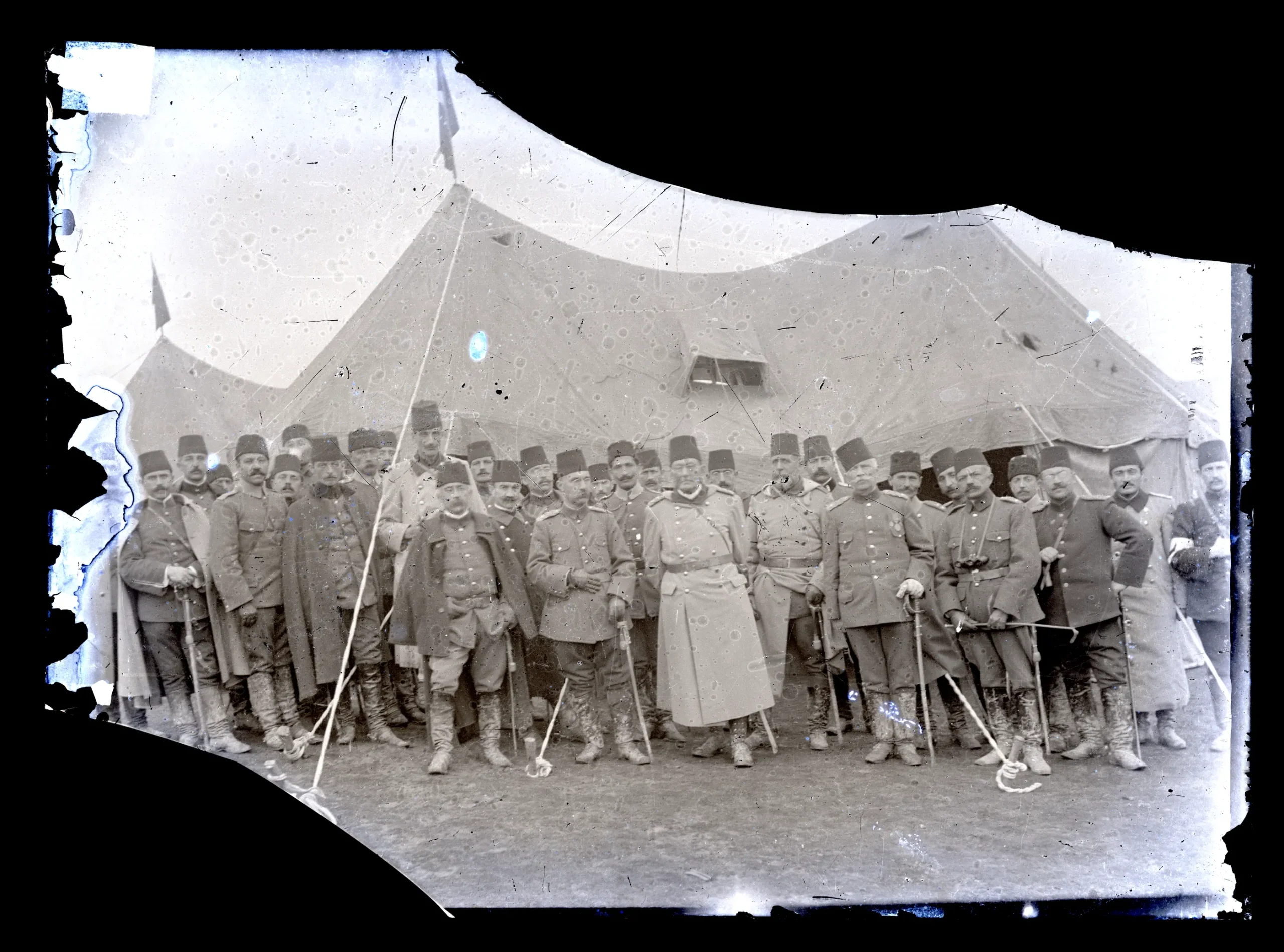
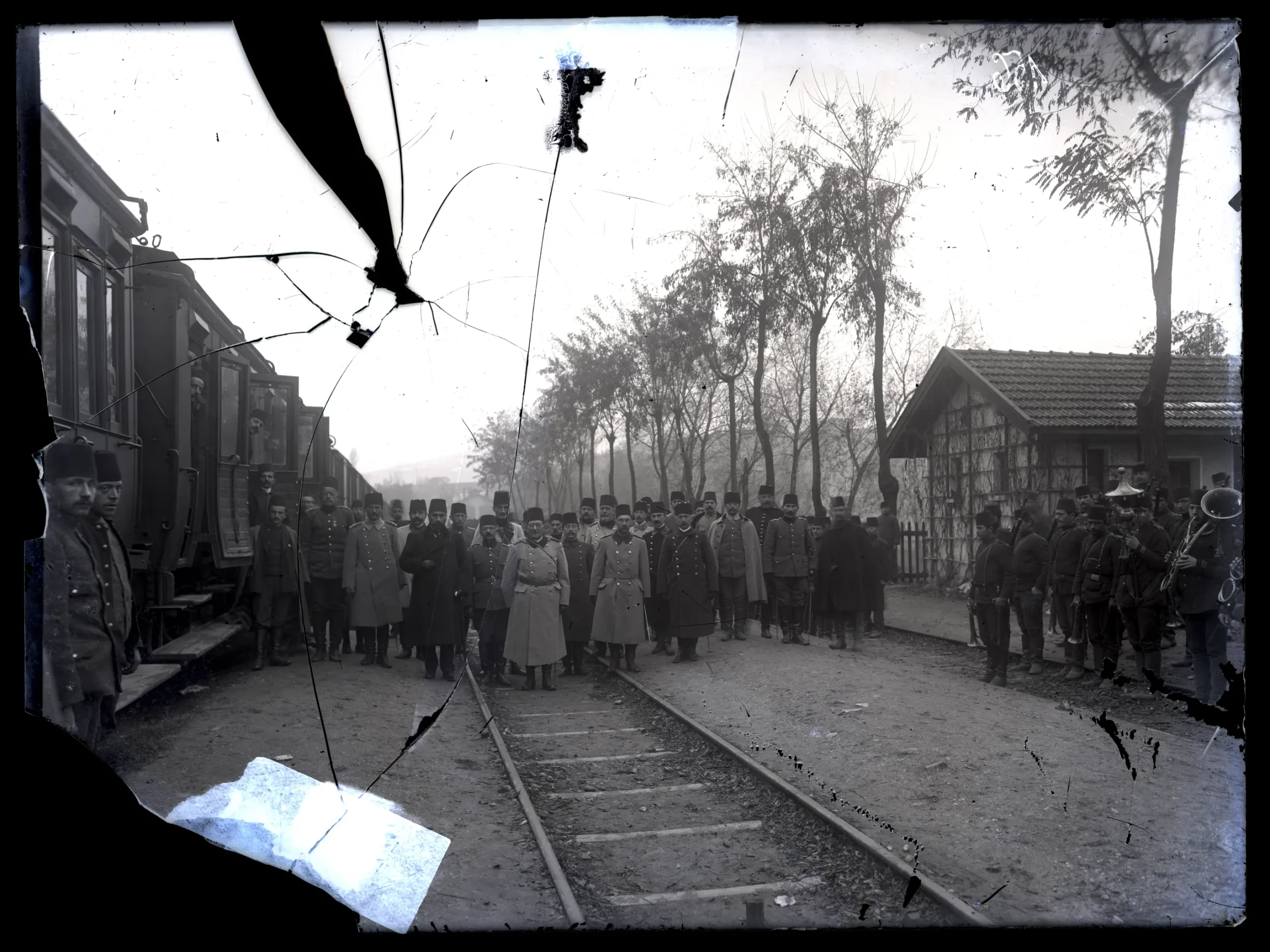
All his life Milton Manakia repeated that he had photographed Mustafa Kemal. He had reason to believe it. Kemal had studied at the military high school in Monastir, and the brothers photographed everything that passed through the town: pupils, officers, pashas, sultans. The archive believed him, and two glass plates entered the registers as “pupils of the military high school, with Kemal Atatürk”.
Plate 1417 shows a schoolyard: almost fifty pupils in uniform, with fezzes and sabres, in three rows, in front of a building with broken windows. Plate 515 is a studio portrait: six young officers, sabres resting against their boots, between a heavy drape and a flowered wallpaper. I went through every face, row by row. Kemal is in neither.
It was someone else. I started from a simple hunch: of those young men, many had become someone in history. The officer on the far right of plate 515, by the window, with the thin moustache and the level gaze, is Ismail Enver, the future Enver Pasha, one of the leaders of the Young Turks.
The same man appears on plate 1417 too, on the left, a little apart from the rows of pupils.
Enver and Kemal were born in the same year, 1881. They were officers in the same army, in the garrisons of the same crumbling empire, and rivals from their youth. Enver would lead the Empire into war. Kemal would make Turkey out of its ruins.
If Kemal’s photograph existed, it had to be looked for later: not among the pupils, but after he had returned to the region as an officer. I suggested this lead to my colleagues at the Bitola Archive, Goce, Dimitar and Maria. They found the photographs.
It is 1909. The Young Turk Revolution of 1908 had forced the sultan to restore the constitution. The counter-revolution of spring 1909 had been crushed by an army marching from Salonica, and Abdulhamid had been deposed. The Empire recalled its most respected instructor, the German general Colmar von der Goltz, Goltz Pasha, to reform its army. Goltz made a tour of inspection of the Balkan garrisons. Monastir was one of them, and the Manakia brothers were there.
The first plate: the station. A passenger train, carriage doors open, curious heads at the windows. In front stands the delegation: long greatcoats, some dark, some light, fezzes, boots. In the front row, squeezed between two senior officers, is a young officer with a thin moustache and a fixed gaze.
The second plate: a field of manoeuvres. Behind, large tents with pennants on their poles; in front, boots caked in mud. In the centre, an elderly man with spectacles in a light greatcoat: von der Goltz.
In the second row, half hidden, is the same face from the station.
The third plate is also from the station, from the same day. A brass band waits for the train.
Among the crowd, almost hidden between officers, stands Ianaki Manakia. If Ianaki is in the photograph, Milton was holding the camera. So Milton was there, with his camera, on the day a young officer named Mustafa Kemal stood on the platform. The photograph he spoke of all his life did exist. It was just not the one he showed.
A suspicion, however solid, remains a suspicion. I asked for an expert examination. The forensic artist Aurelian Bădulescu compared the face in the Bitola photographs with certain portraits of Atatürk: the shape of the head, the line of the eyebrows and ears, the line of the nose, the lower lip, the furrows between the brows. His conclusion: it is the same person.
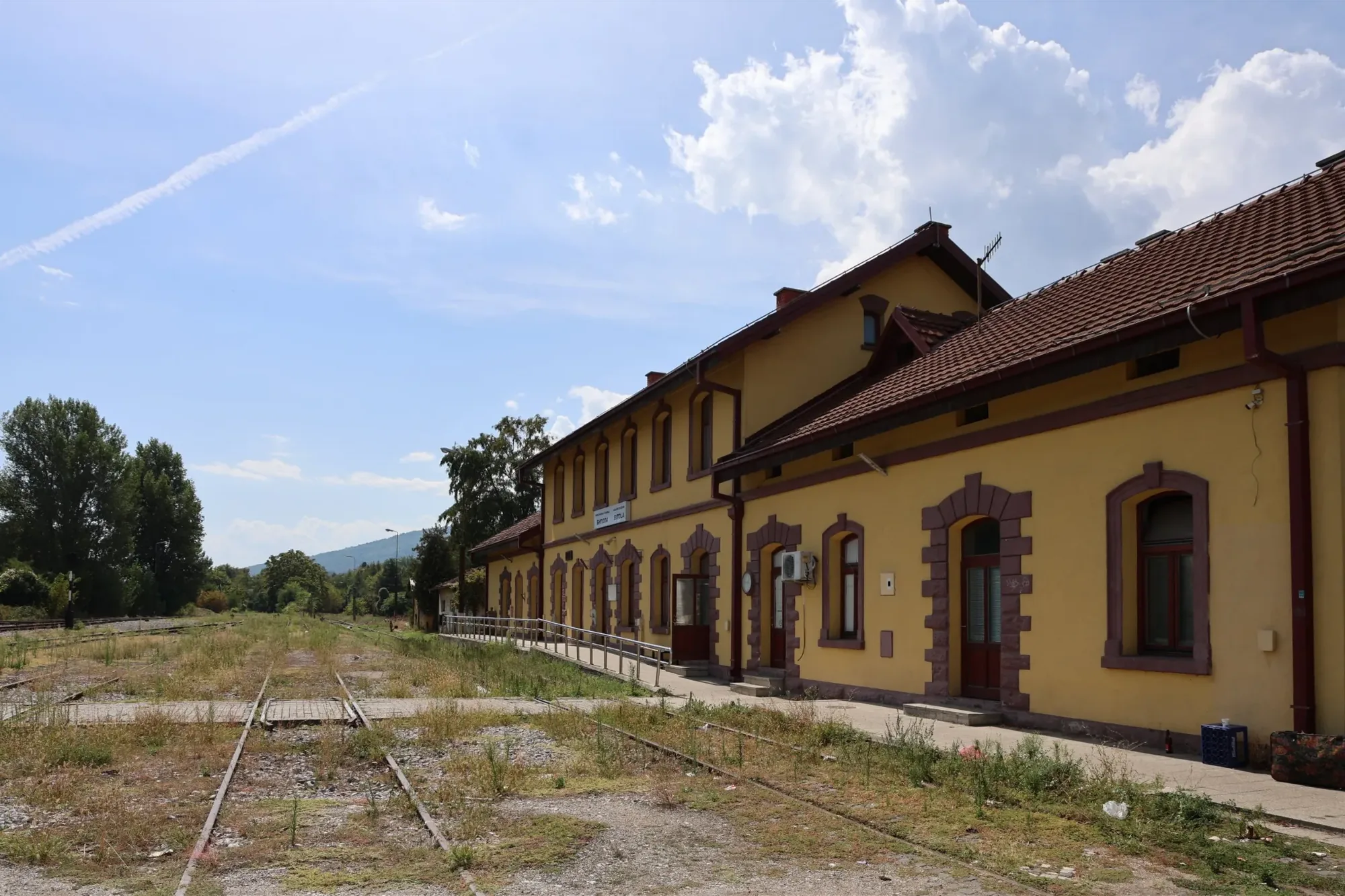
This autumn I travelled to Bitola by train, on the old Salonica–Monastir line, opened by the Ottomans in 1894. Von der Goltz’s delegation arrived on it in 1909; the sultan would come along it two years later. It was a good line, with handsome trains. Today the train stops at Florina, on the border between Greece and North Macedonia. For the last twenty-five kilometres to Bitola there is no train and no public transport of any kind. It is, in miniature, a history of the Balkans over the last century: the line remained, the road was cut.
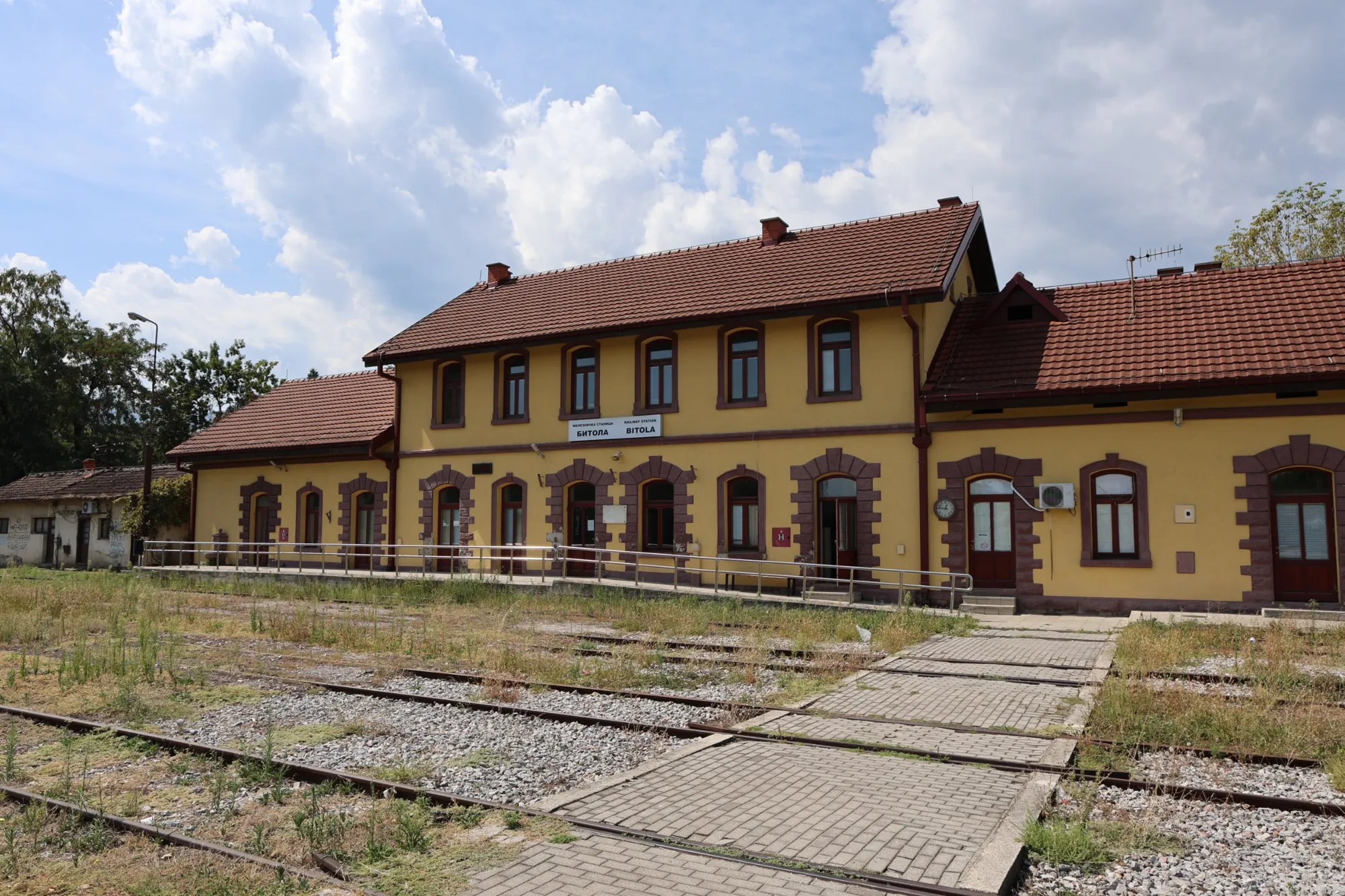
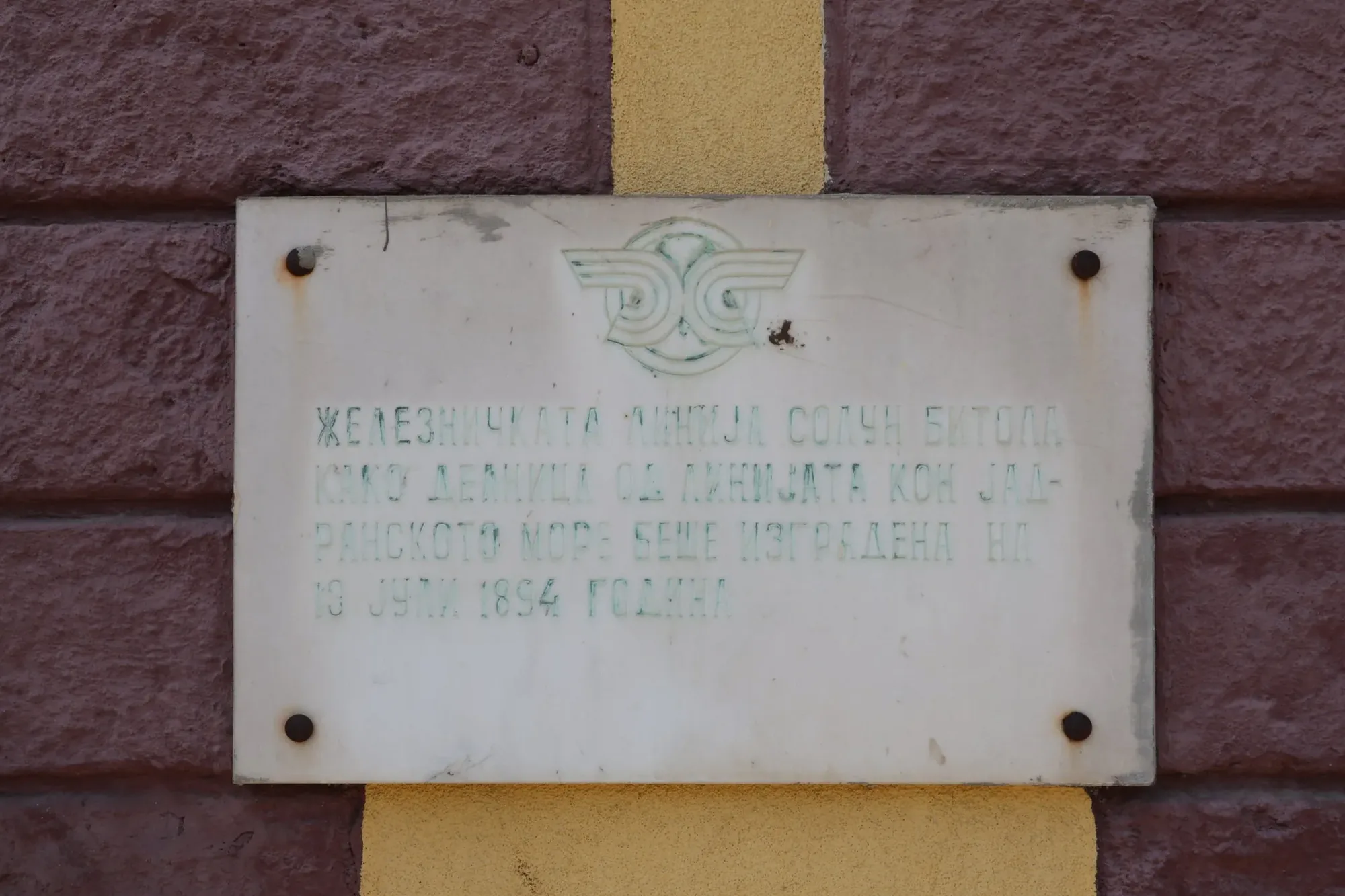
The station is still there. The same yellow building, the same red brick arches around the windows. On the wall, a marble plaque recalls the date: 13 July 1894.
Forensic examination · Aurelian Bădulescu (PDF)
Thirteen publications in North Macedonia and Türkiye reported the discovery. The Bitola Archive has announced further research.
What was in the frames
Plovdiv · April 2026
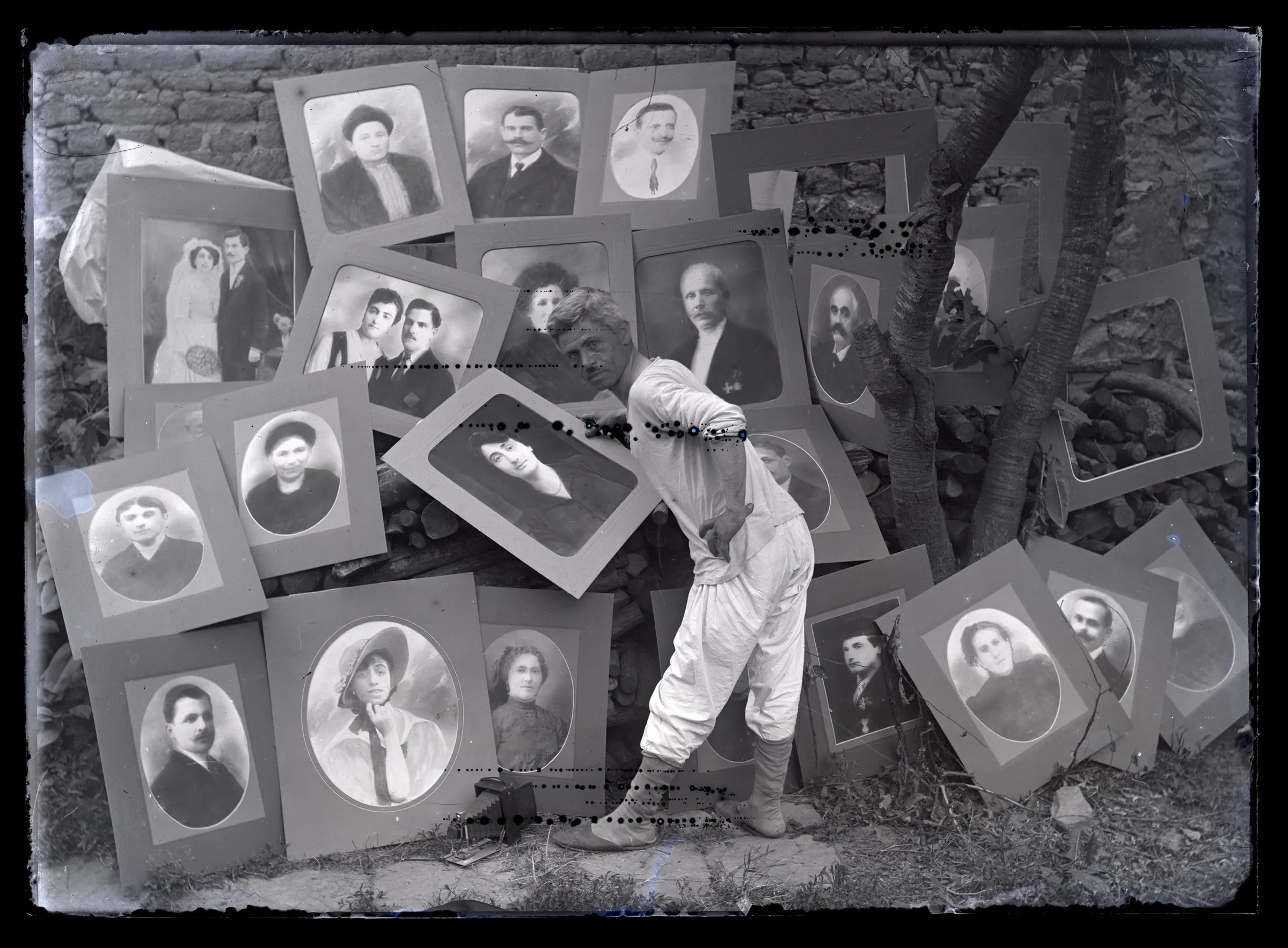
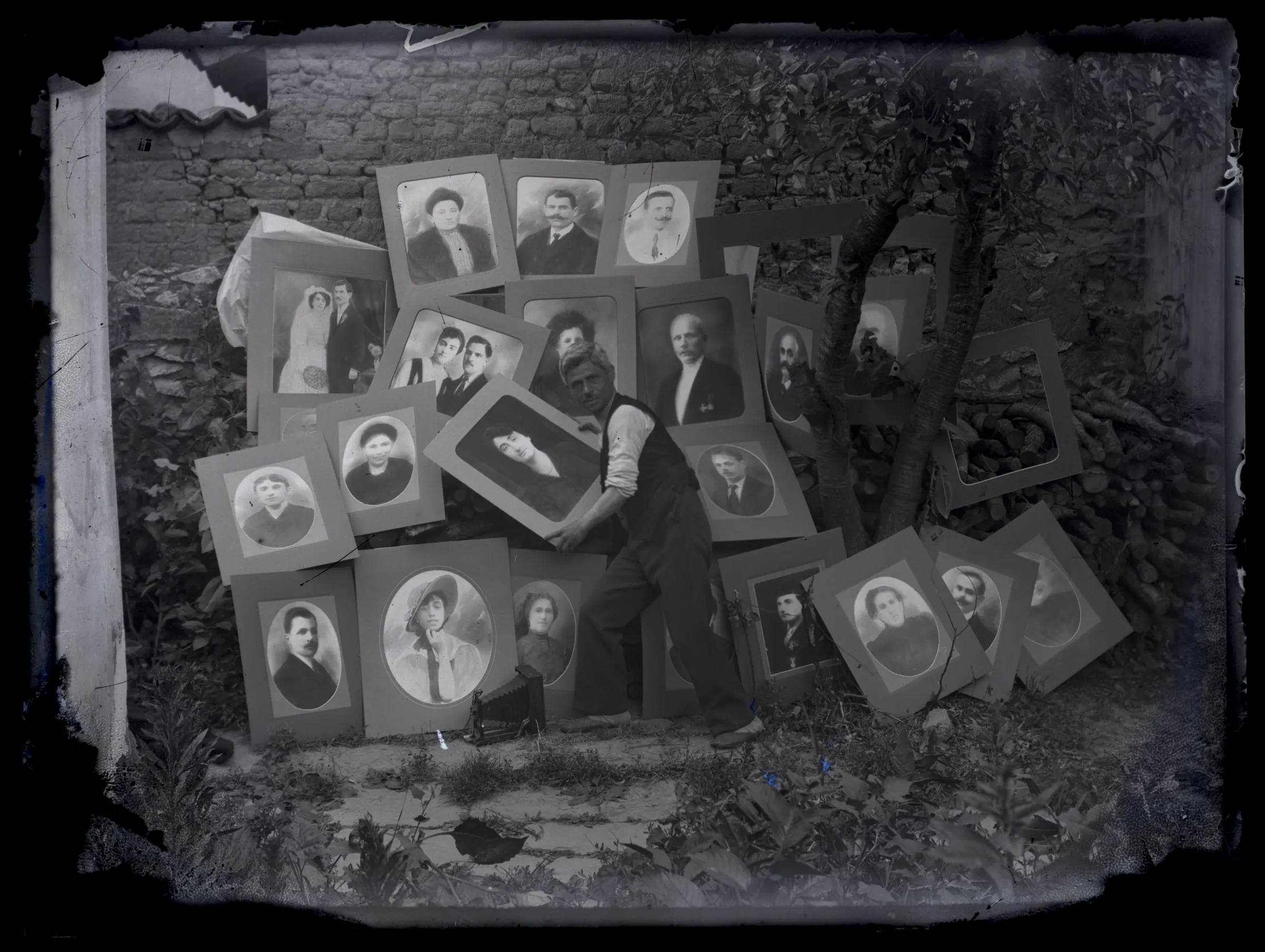
Between 1916 and 1919 Ianaki Manakia lived in Plovdiv, then Philippopolis, under house arrest. He was far from Bitola, from his studio, from his brother, and was not allowed to leave the city. A man who had spent his life on the road, with his camera on a mule, could no longer travel.
From those years the Bitola archive keeps many photographs of him. Two, taken in the same place, are like two versions of the same man. In the first he stands in the courtyard, among the portraits, in his underclothes.
In the second he wears a suit, the dress of a respectable photographer. In both he looks in very good spirits, almost jovial. Nothing in them says this is a man under guard. On the contrary, he seems a man who has found clients and a purpose. Around him, propped against a stone wall, are large framed portraits: men with moustaches, women with tall hairstyles. In Plovdiv Ianaki did what he knew: portraits.
The photographs were known, but they had been read as biographical documents: Ianaki in exile. I was interested in the frames. I looked at them in Plovdiv with Petko Todorov, ethnologist at the Regional Ethnographic Museum, and said aloud what had been on my mind for a long time: if these portraits were made here, some of them should still exist. Petko looked at the image for a long while. “I think I’ve seen one. But I’m not sure.”
The first portrait turned up that very day. A man with short white hair, twirled moustaches and two decorations on his chest. It is the face in the frame beside Ianaki’s shoulder.
The second appeared the next day: a woman with a tall hairstyle. On both, in the lower right corner, the same ink signature: Manaki, the abbreviated name of the city, Phil., and the year.
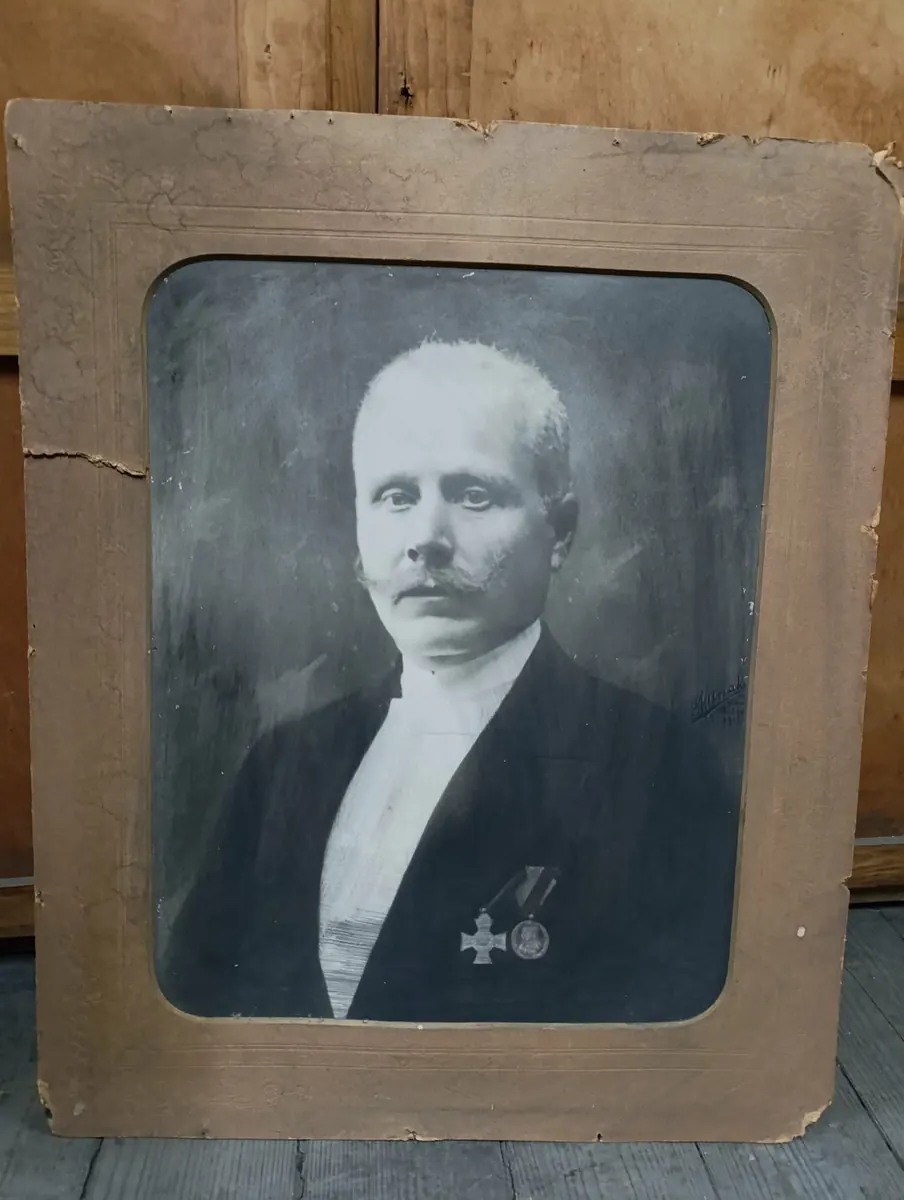
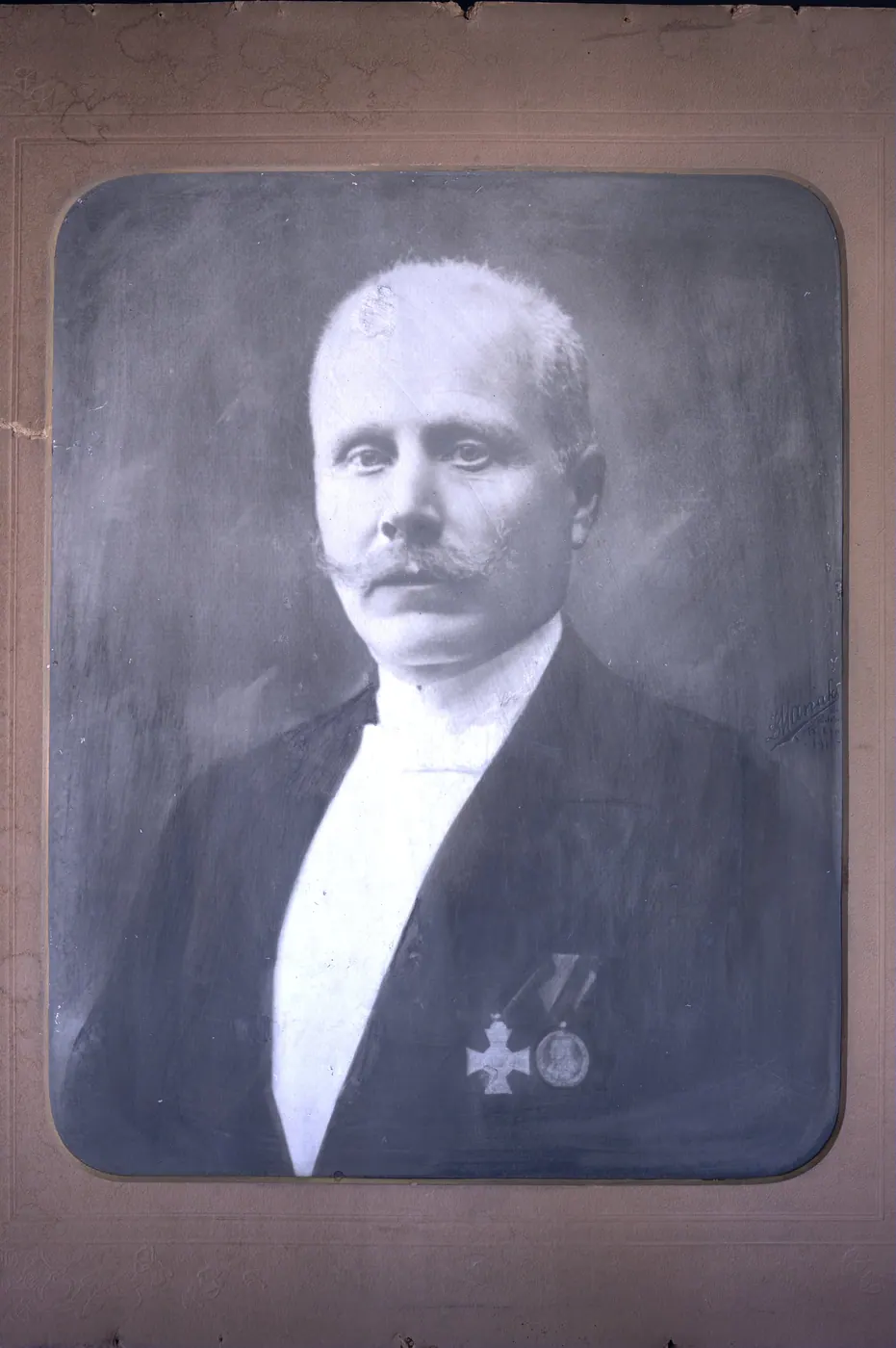
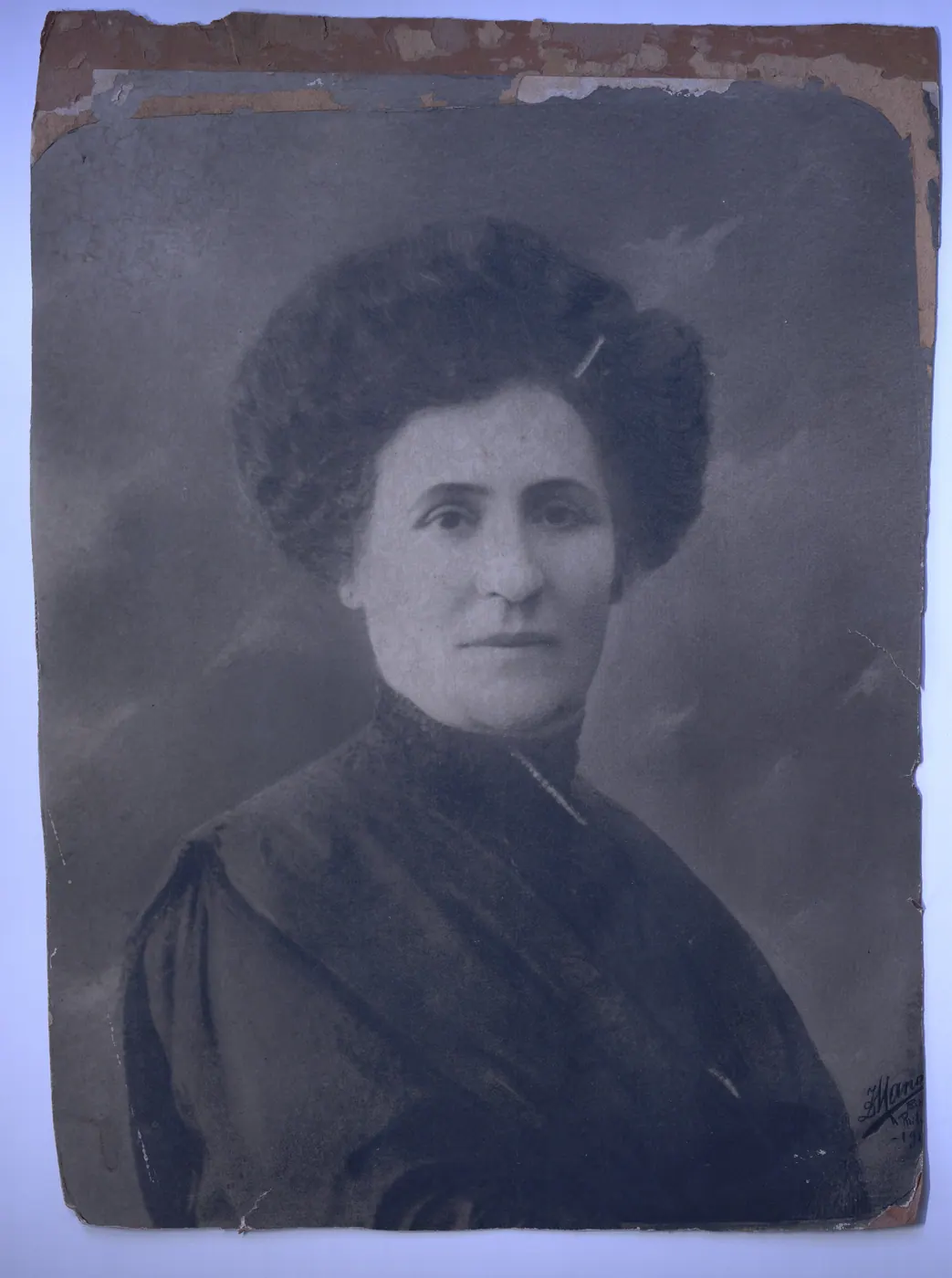
We can name the man: Konstantin Giorgiev Iakumidis, barber to the prince and later to Tsar Ferdinand of Bulgaria, who gave him the decorations on his chest. His shop appears in another Manakia photograph: the sign above the window reads Придворен коафьор, court barber. From the city’s antique shops I then bought more photographs in which the same people appear. For a century each had gone its own way, through houses, inheritances, removals, wars and changes of regime. Now they met again in the same story.
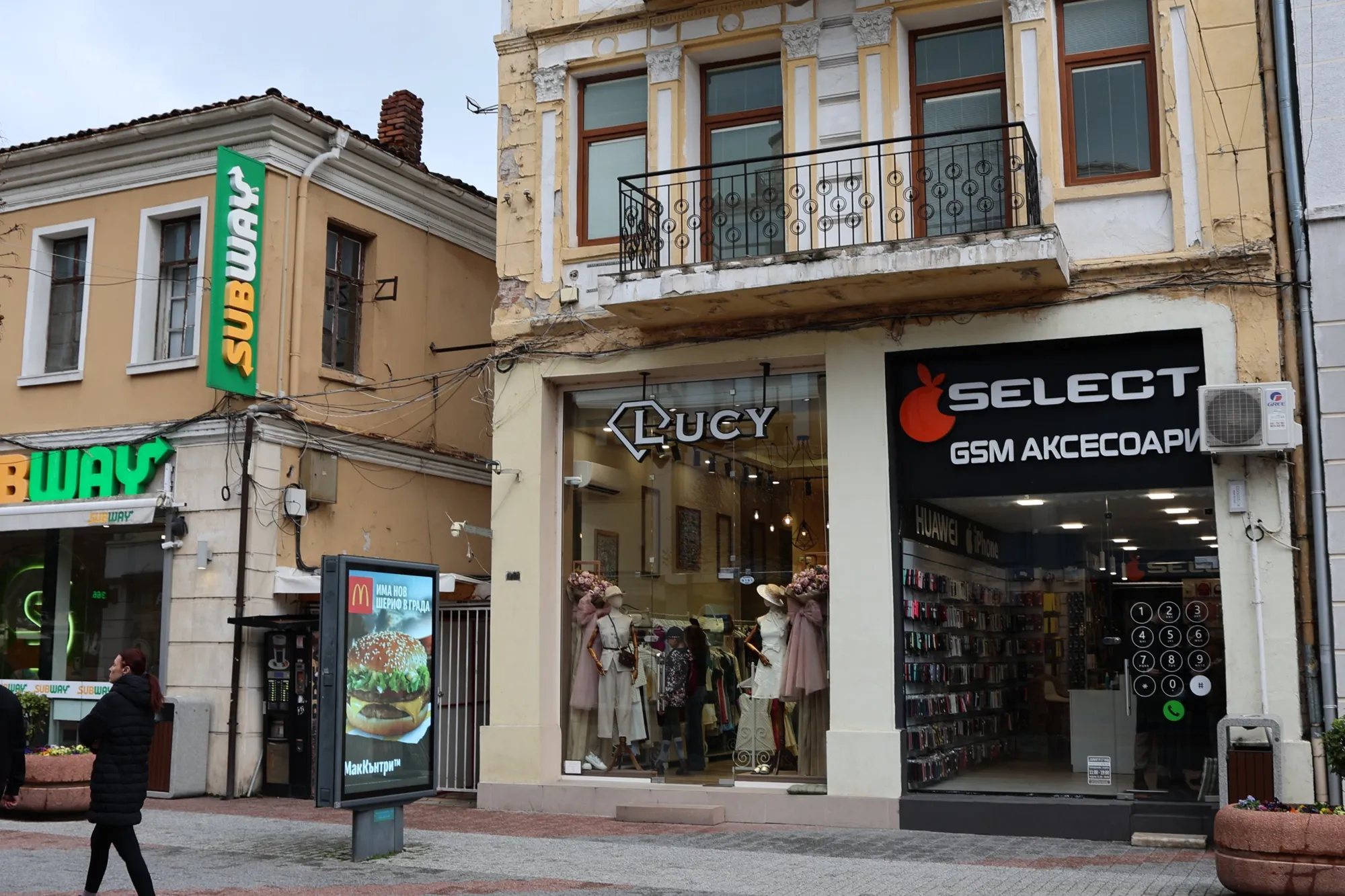
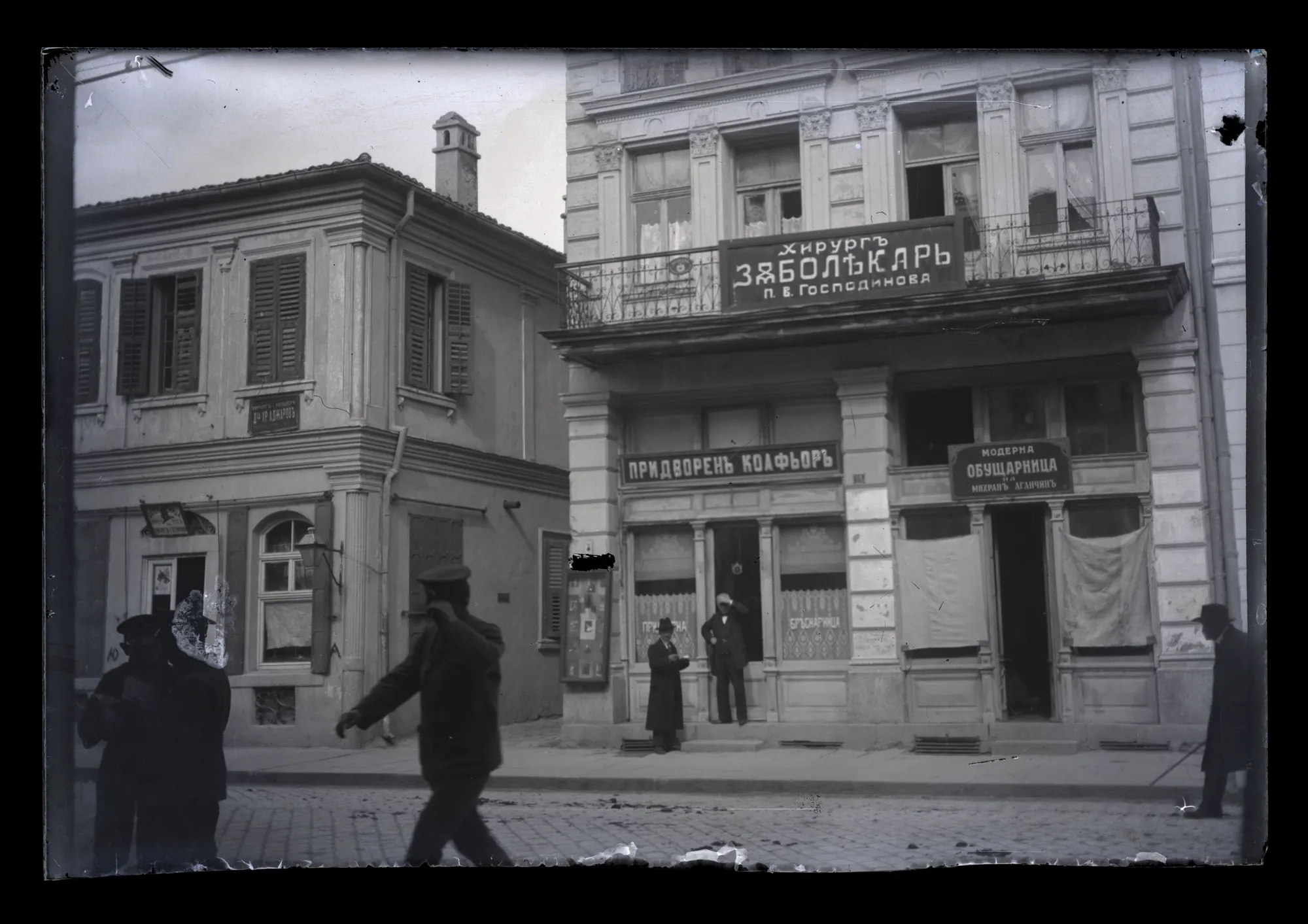
There is another photograph from the same street, taken in the opposite direction. Ianaki stands behind a wrought-iron gate, hat on his head, holding the bars like a prisoner. Above the gate, a sign: Фотография, photography. For a man under house arrest, it is hard to say whether this is a joke or a confession. Probably both.
The gate stood between the two buildings in the picture above. Through the bars you can see the house opposite, and that house still exists. The gate is still there too, between a café and a shop: white now, with a coffee machine beside it.
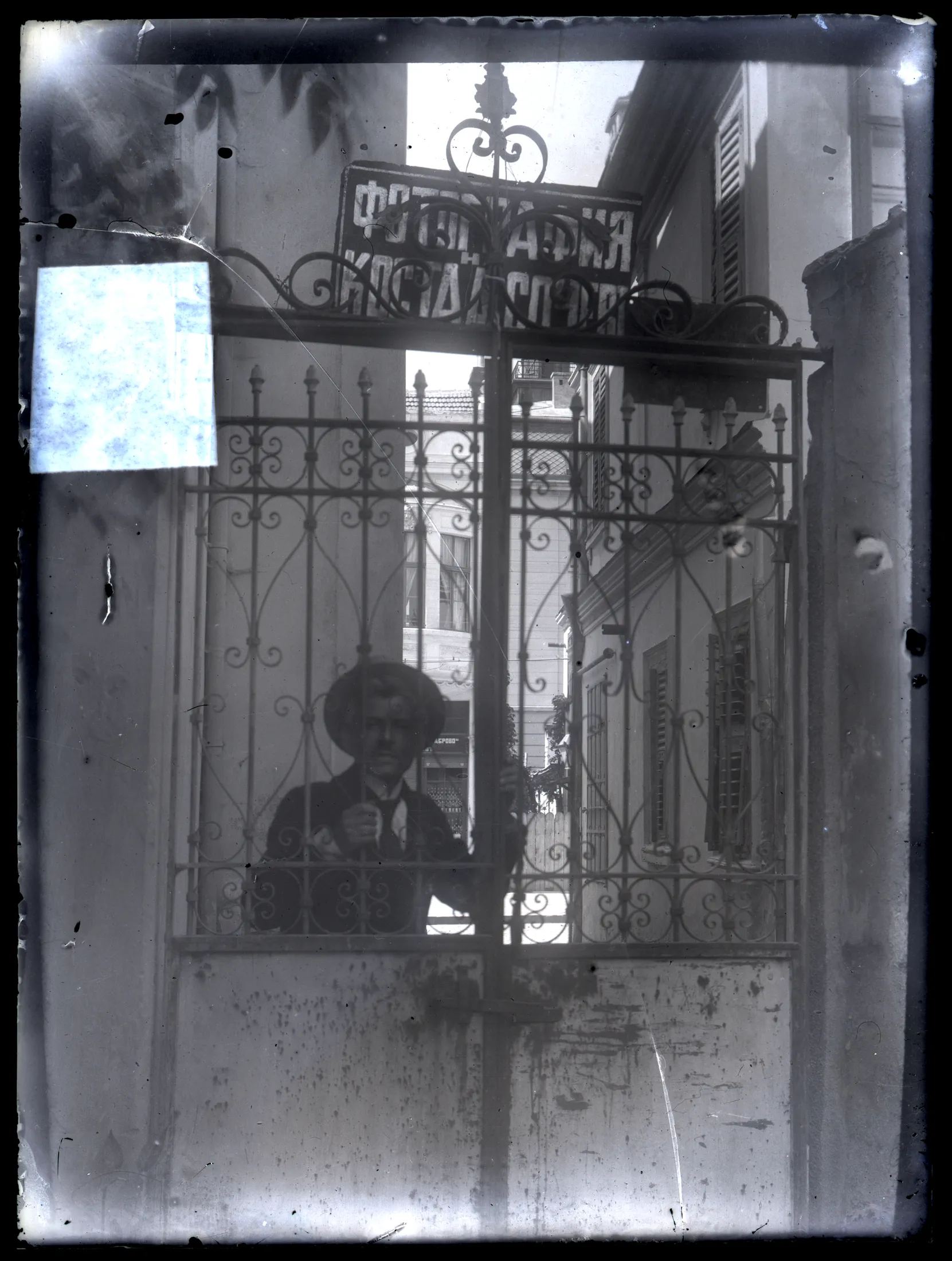
The background of the photograph was no longer scenery. It had become evidence.
The mountains did not match
Sliven · April 2026
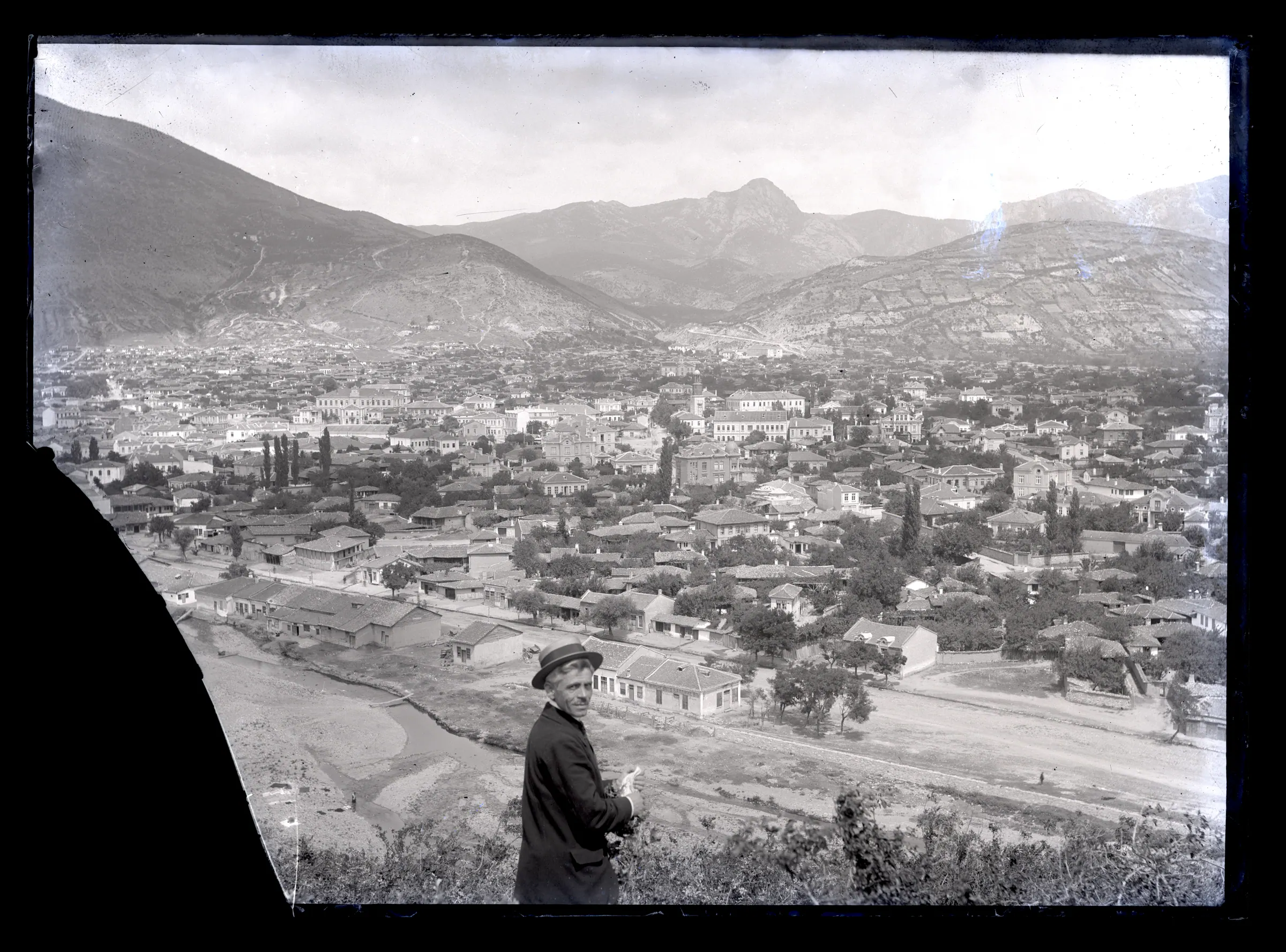
In the register of the Bitola archive, the photograph reads “panorama of Plovdiv, with Ianaki in the foreground”. Ianaki stands in front, the town spreads out behind him, and a mountain rises on the horizon. The people in Plovdiv I showed it to said it was Plovdiv.
I looked at it with the real town in front of me, and something did not fit. Plovdiv is a town of hills, with hillocks between the houses, not a town at the foot of a wall of rock.
First there was a feeling, then a suspicion. The mountain had a shape I had seen before: Sinite Kamani, the Blue Rocks, the massif that towers over the town of Sliven. I knew them from my travels during the pandemic years.
I went to Sliven with the photograph and looked for the angle. Socialist apartment blocks have completely changed the town’s skyline, so at first sight today’s panorama looks like another place. Comparing, three buildings from Ianaki’s picture nevertheless emerged, still standing, and among them the area of the old clock tower. The photograph is not from Plovdiv. It is from Sliven.
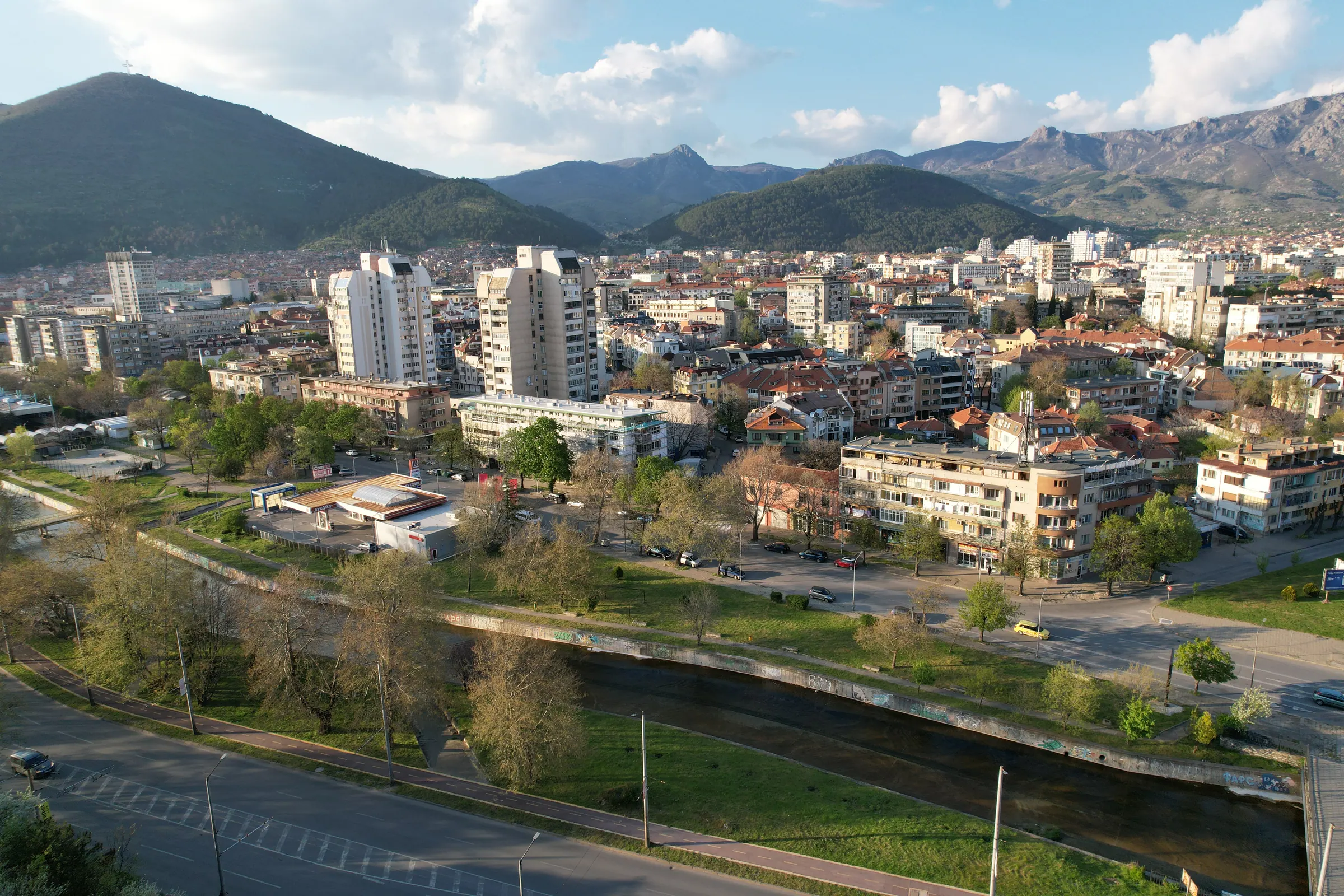
One mystery closes and another opens. Officially, between 1916 and 1919, Ianaki was not allowed to leave Plovdiv. How did he get to Sliven, a hundred kilometres away, with his camera? Perhaps he was granted an exemption. Perhaps there is a document nobody has found yet. Or perhaps, as so often in the Balkans, the distance between the rule and reality was smaller than the official papers suggest.
The same minute, in three countries
Zagori, 2017 · Bitola, 2024 · Xanthi, 2025–2026


Laista, Laka in Aromanian, is the most isolated village in the Zagori mountains. Around 1900 it had more than two thousand inhabitants. Today, in winter, nine people live there. The Manakia brothers photographed the village twice: a wide panorama and a feast in the square.
I had dated the panorama roughly: around 1900. In 2017 I showed it to Takis Tzimas, an Athenian photographer from Laista, who published it in the village magazine. A few months later the magazine reached Bucharest, and the photograph had an exact year: 1898. The villagers each knew when their house had been built. From the houses that appear and those that are missing, they dated it more precisely than any archive. A community that never wrote its history had remembered it to the year.
The photograph of the feast had a different fate. In a house in the village, belonging to the Papathanasiou family, an almost identical image was kept, probably taken a few minutes apart, with the same people slightly shifted.
Then, in 2024, in the Bitola archive, I came across a broken fragment of a glass negative with the same scene. Three photographs of the same minute, kept for a century in three countries, Romania, Greece and North Macedonia, unaware of one another.

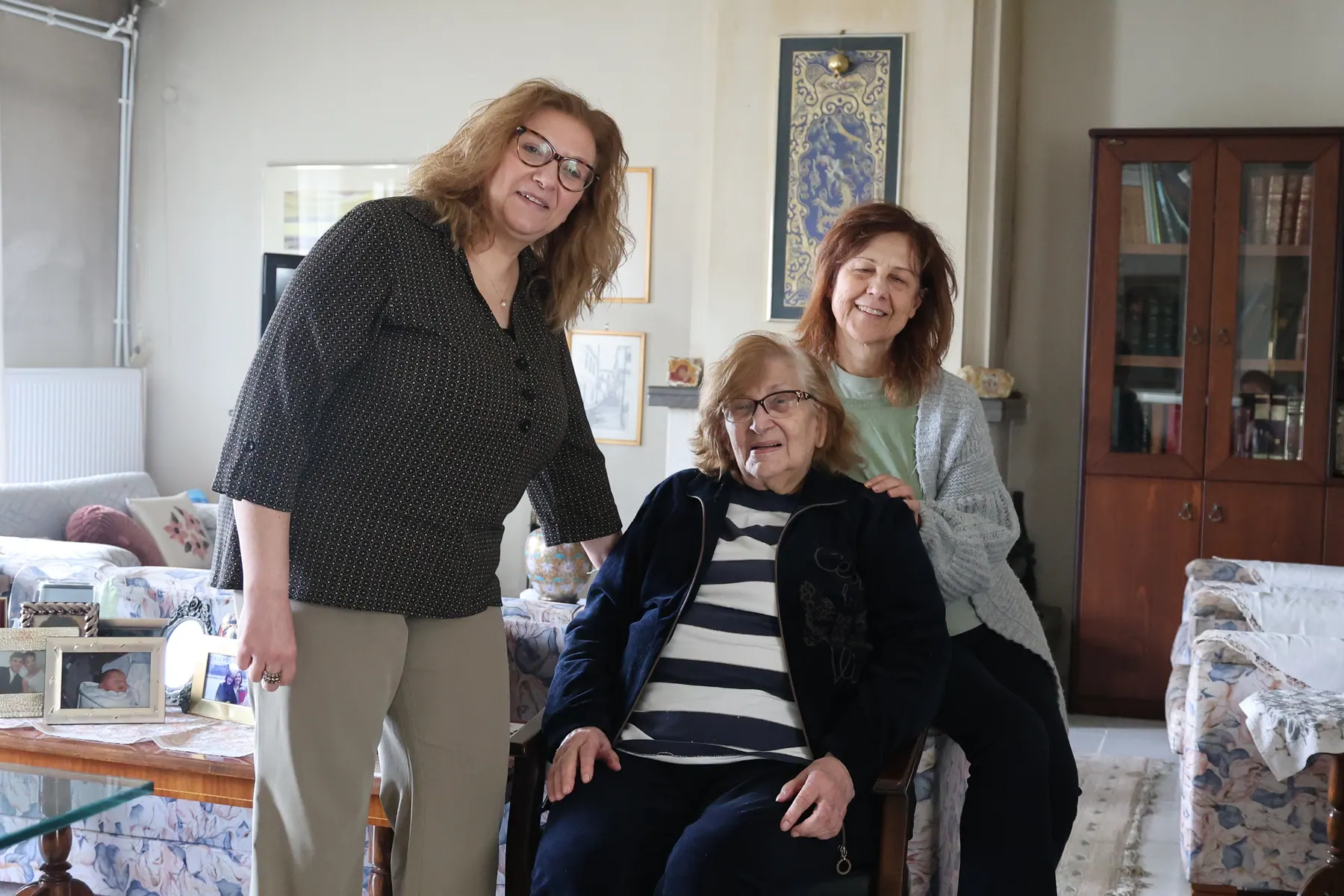
I met Mrs Chariklia Margaritopoulou, born in Laista, in Xanthi in November 2025. I had emailed her long before and heard nothing. Her answer came on the one day I happened to be in the town, on the road between Skopje and Istanbul, moving the exhibition. She had started from the papers in a family chest and written a thick book about the village’s families, scattered all over the world. As a child she rode on horseback from Grevena to Laista, two days through the forests of the Pindus.
We met again in February 2026, on the first day of Lent, the day after the Xanthi Carnival, over flatbread and many kinds of halva, as Greek tradition requires. A few days later I learned that she had died.
A steeple and a tower
Korçë · October 2025
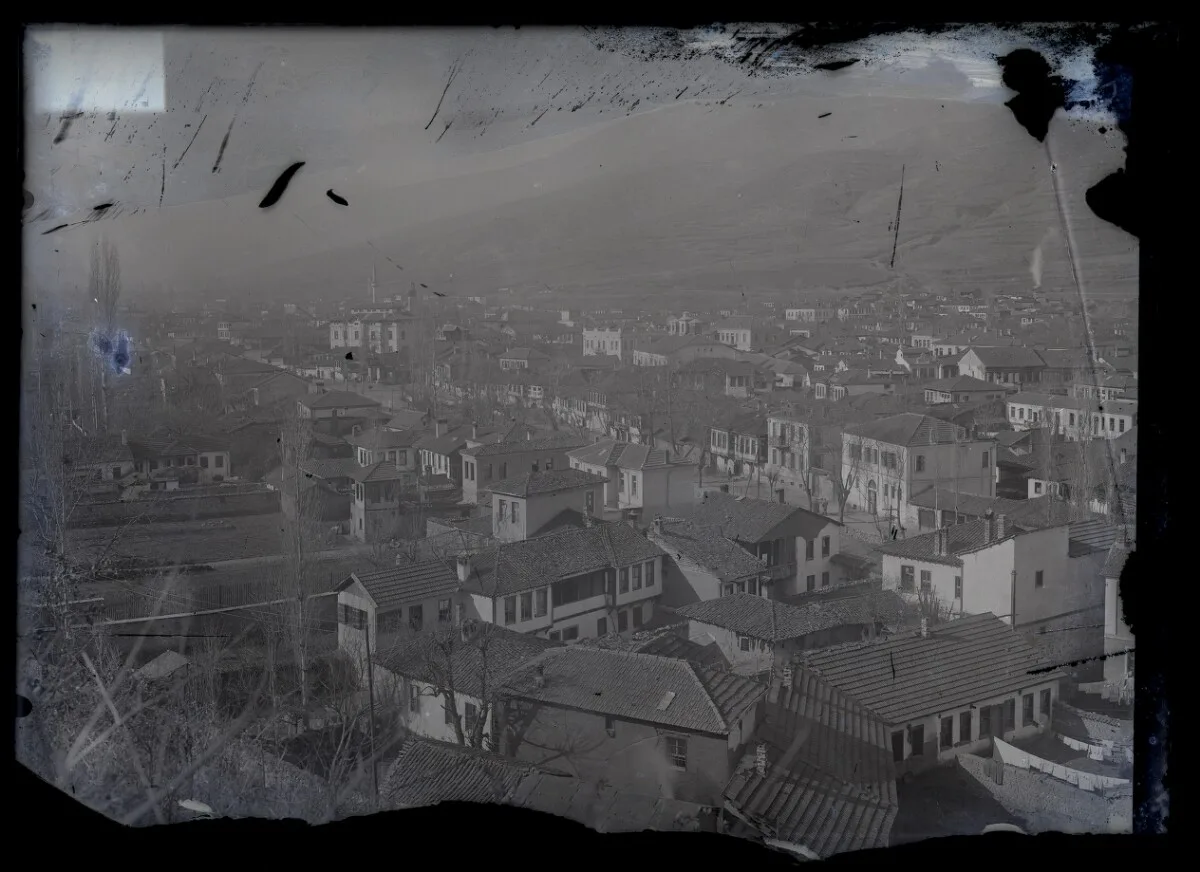
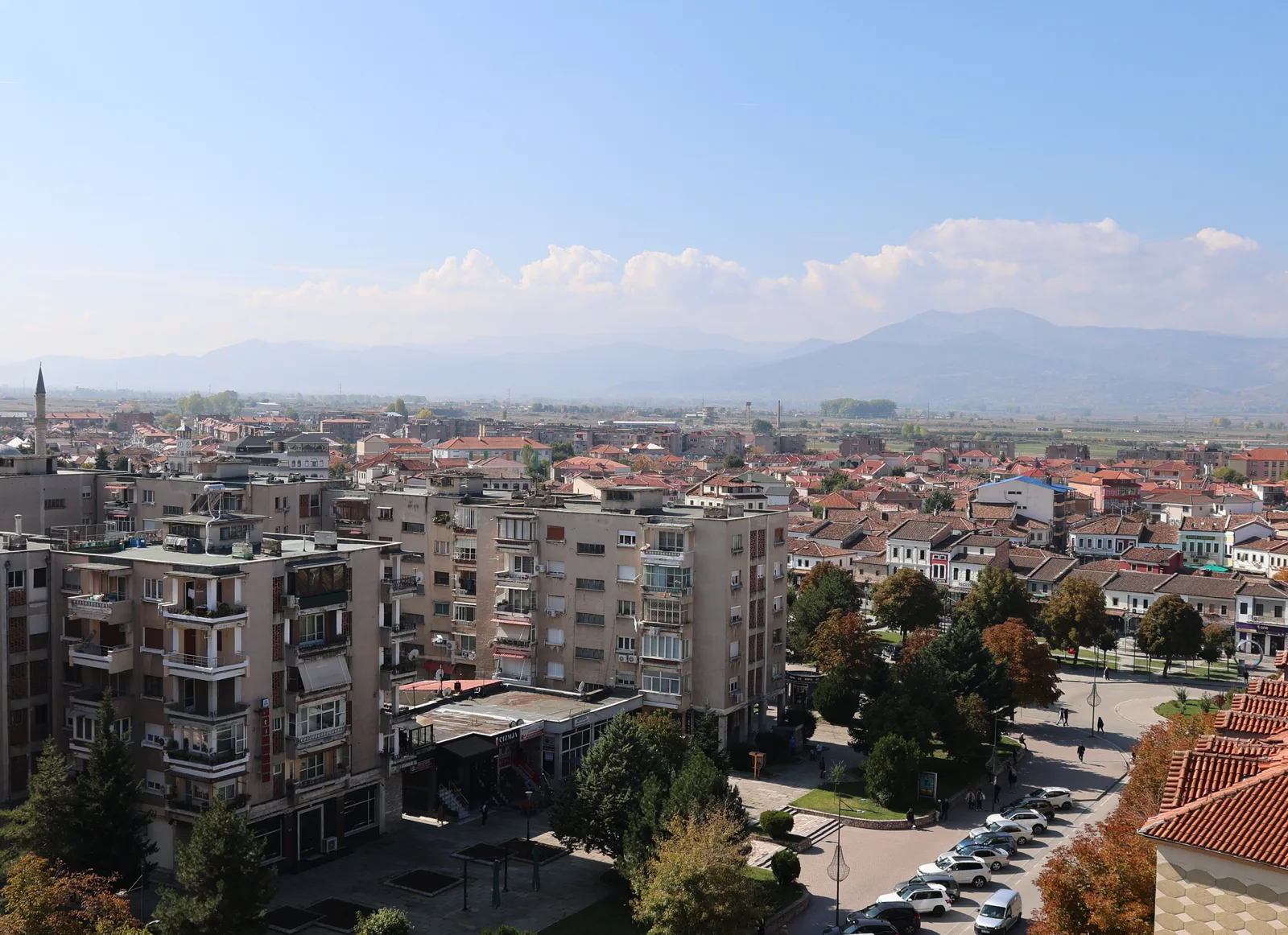
Milton’s photograph shows Korçë from above: tiled roofs, courtyards, straight streets climbing towards the hill, and at the back, beneath the bare mountain, the minaret of the Mirahori Mosque, one of the oldest in Albania. At first sight it looks as if it were taken by a drone.
I wondered where it had been taken from. The angle leaves few options. Around 1900 there was no building that tall in Korçë. Only one place could lift a photographer above the roofs: the steeple of the Church of St George, completed in 1905.
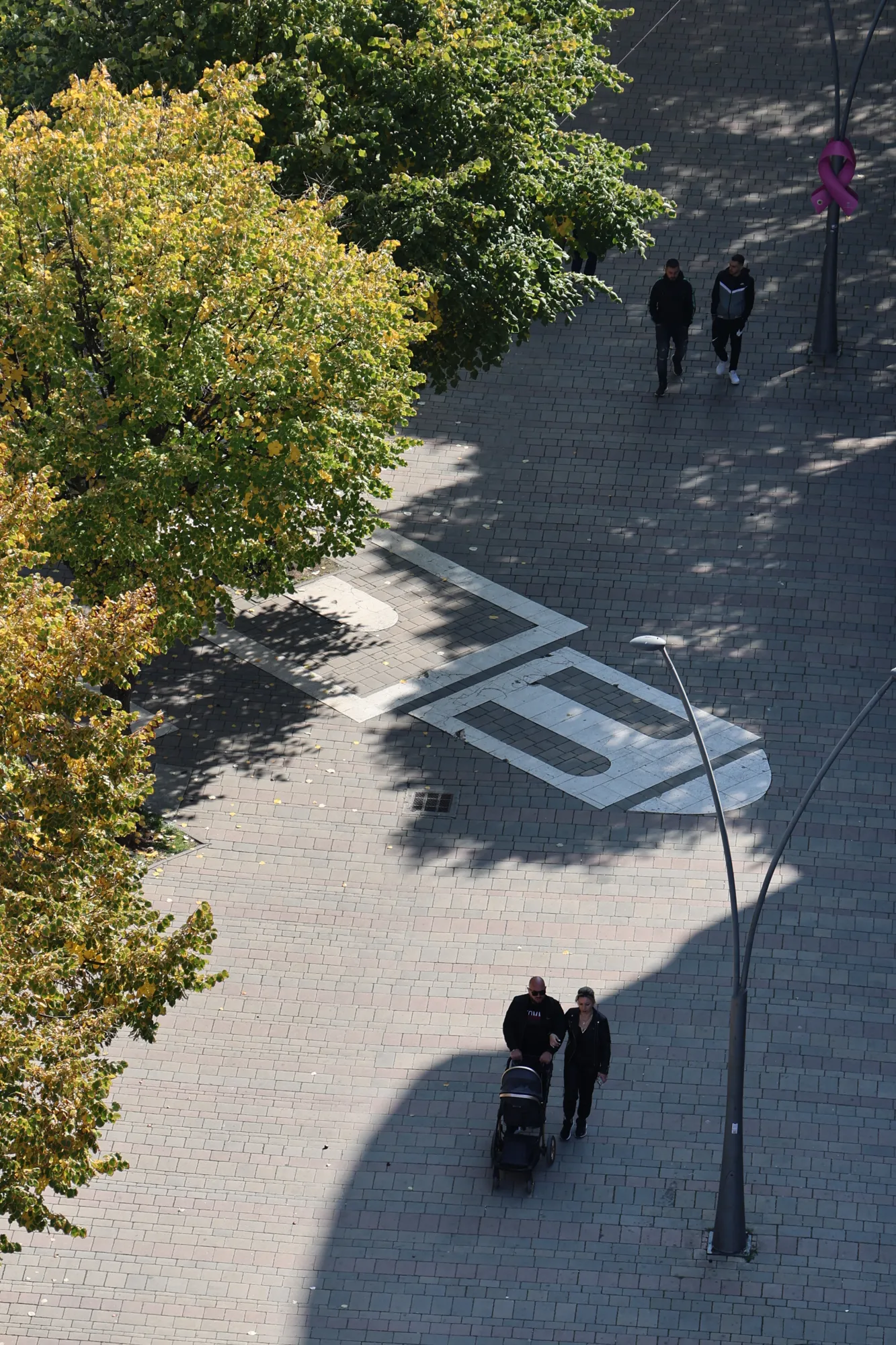
The church no longer exists. In the late 1960s the communist regime demolished it to make way for the library. I retook the photograph from the only high point left nearby: a tower built in the same era, a few dozen metres away. On the left the minaret of the Mirahori Mosque appears again; in front, the apartment blocks of the 1970s. A steeple was replaced by a tower. The town is recognisable, though the minaret is a different one: destroyed under Enver Hoxha’s regime too, it was rebuilt in 2014.
From above, from the same tower, I also saw the trace of the church. Its outline is drawn today in white stone in the street paving, apse and walls laid out like an architect’s plan. Every day someone lights a candle there, on the site of a church whose steeple, a century ago, an Aromanian photographer climbed with his camera on his back.
A house for a single visit
Bitola · November 2025
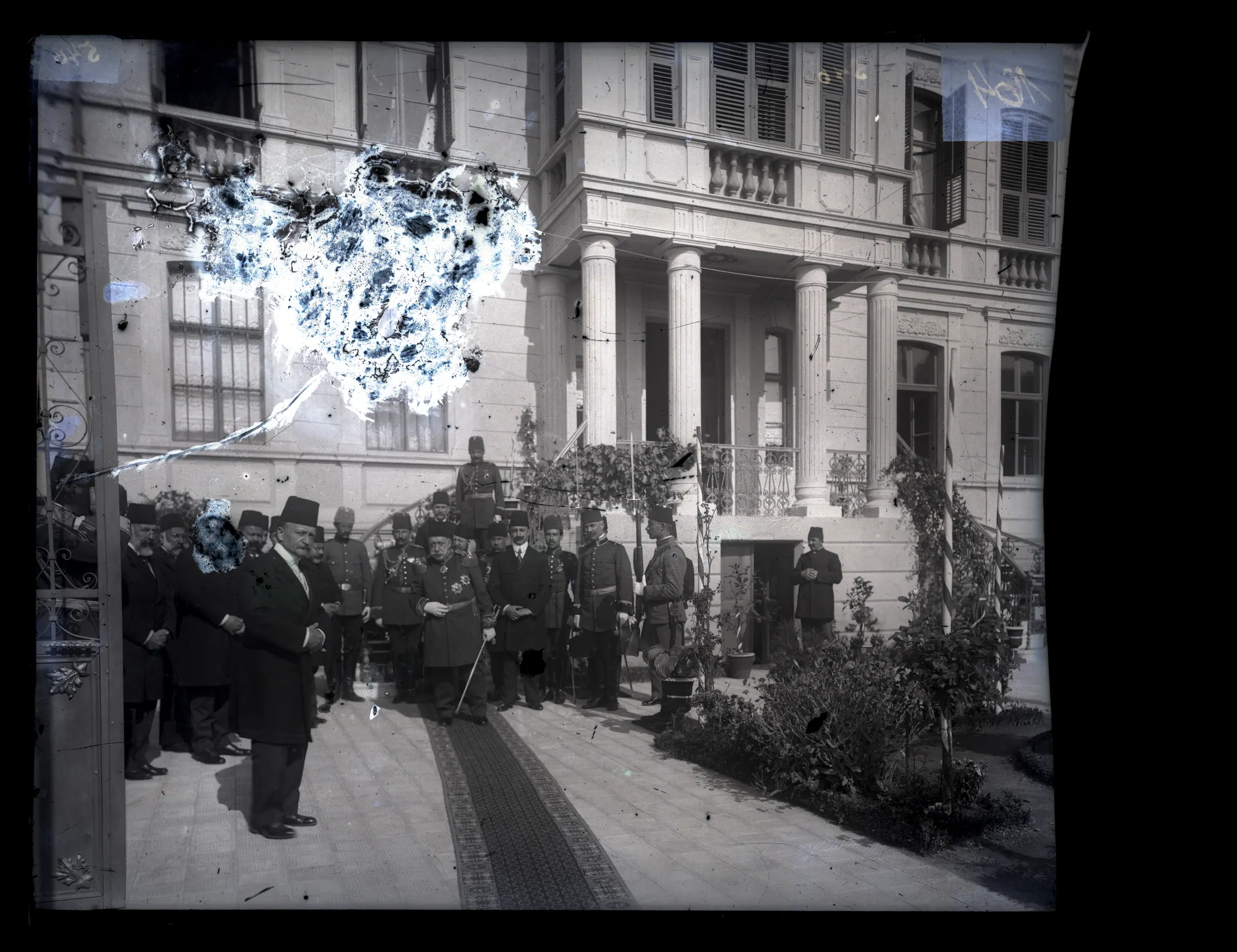
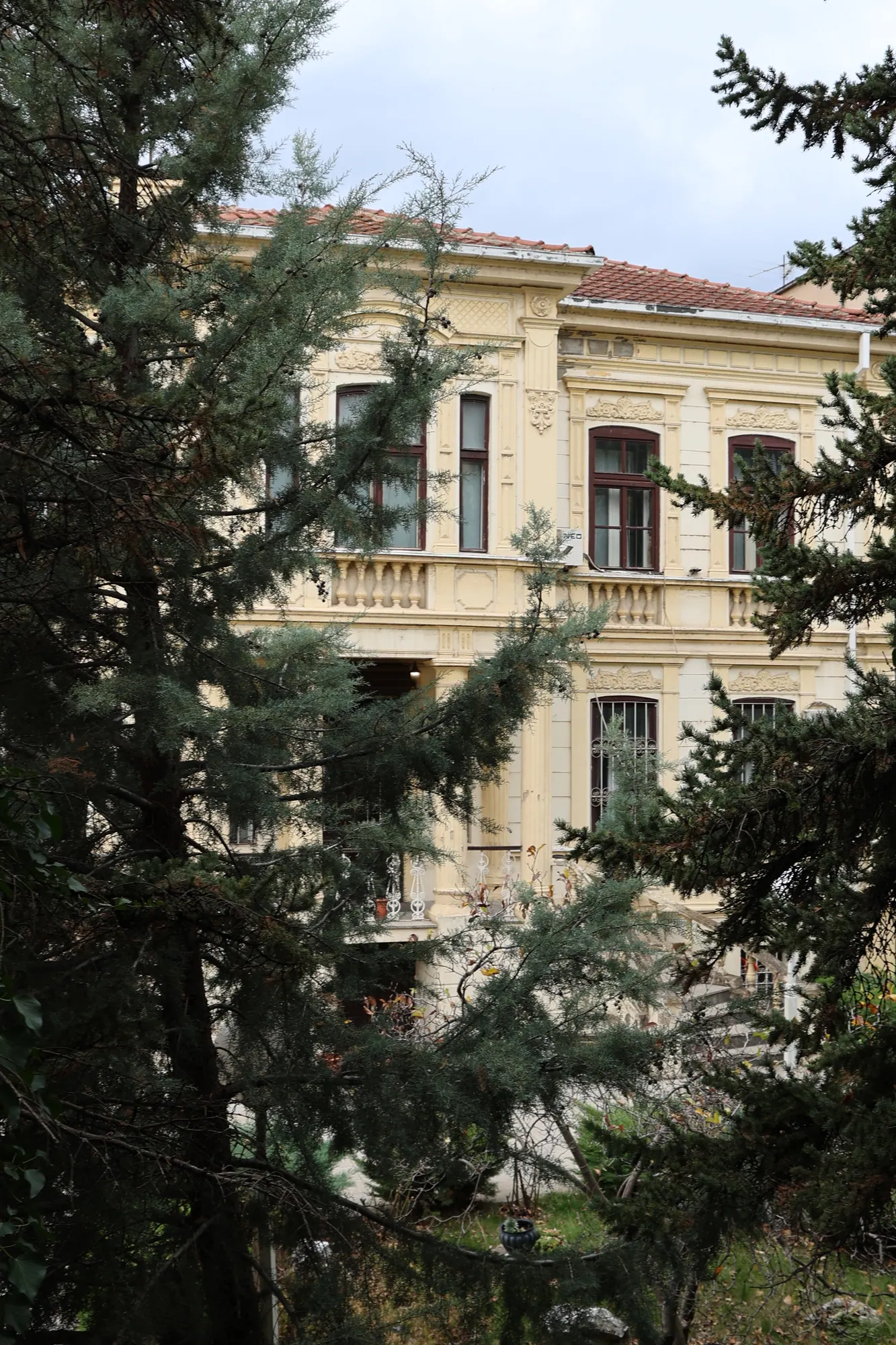
I photographed it from the window of the Archives, through the fir trees. The building was put up for a single visit: that of Sultan Mehmed V Reshad, in the summer of 1911. It was the last journey of a sultan from Constantinople to the still-Ottoman Balkans.
The Manakia brothers photographed the ceremony in front of the house: officers, officials and notables arranged with the precision of protocol, each in his place. It is the image of an order that looks sure of itself. A year later the First Balkan War began, and Bitola was among the first cities the Empire lost.
The house is today the university rectorate. The façade is neoclassical, European, as the political taste of the time required. The plan is Ottoman, turned inwards, with hierarchies of rooms the façade does not betray. Outside, Europe; inside, the Empire. Like the whole town.
The brothers also filmed the visit: the sultan, the procession, the crowd in the streets. A few seconds of film from a world that would vanish within a year.